India Unceremoniously trashes Trump’s Demands to suspend purchase of Russian oil
India is not going to abandon its friendship with Russia, a time tested friend since 1961. This has been made very very clear to Trump and his Administration. A totally exasperated Washington is now “ accusing “ that New Delhi is exploiting Russian crude imports to profit at the expense of global stability, a real laughable argument.
Dr. Subrahmanyam Jaishankar has trashed this lopsided argument with a sharp rebuttal. India being a Sovereign country decides things on its own. The oil trade with Russia is not only its Sovereign decision but a pragmatic marketing strategy in the interest of global stability which is both legitimate and essential.
The American angst has been brewing for months, but intensified after senior US officials, including former trade adviser Peter Navarro and US Treasury Secretary Scott Bessent, criticized India’s decision to continue importing discounted Russian crude oil despite “Western sanctions” which is a completely illegal act as far as India is concerned.
Navarro was particularly “funny” in his recent “comments”, accusing India of running “a refining profit-sharing scheme” that acts as “a laundromat for the Kremlin.” His remarks were a pointed reference to India’s practice of importing Russian crude, refining it into petroleum products, and then exporting some of those products to markets in Europe and the United States.
Naturally Navarro will think on these lines, after all USA and EU are themselves profiteering from the Ukraine Conflict. They need to be encouraged to realize that because of this Ukraine crisis, India is not going to ruin its own economy and prop up Western dominance of the World.
Bessent echoed these allegations earlier this month, claiming India was “profiteering” off “global instability” by purchasing Russian oil at a discount and reselling refined products. Imagine people starting the Ukraine crisis and fanning it till now have the audacity to blame India.
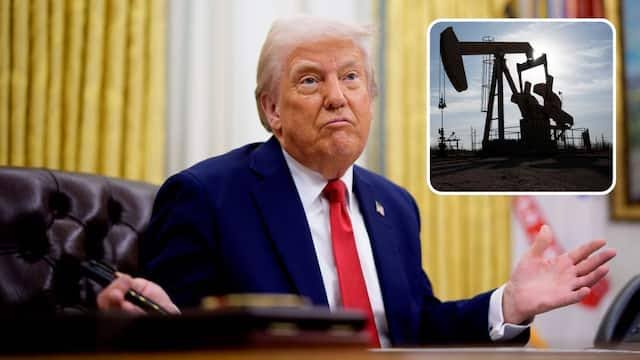
Seeing that India just turned a deaf ear, Donald Trump announced a 25% tariff hike on imports from India, explicitly linking it to New Delhi’s continued oil purchases from Russia. The additional tariff, set to take effect on August 27, comes on top of another 25% duty imposed earlier in the year after trade talks between the two nations stalled.
India has again ignored the tariffs and has reciprocated by imposing its own on American exports.
“If you have a problem buying oil or refined products from India, don’t buy it. Nobody forces you to buy it,” Jaishankar said bluntly, pointing out that the same countries criticizing India also continue to purchase energy supplies indirectly linked to Russia. “Europe buys, America buys, so you don’t like it, don’t buy it.”
He stressed that India’s approach to energy imports was guided by both domestic and international considerations. “Russian oil imports serve both Indian and global interests, helping to stabilize oil prices,” Jaishankar said, noting that access to affordable crude has been vital for controlling inflation and ensuring energy security for India’s vast population.
India’s stance reflects its own broader geopolitics. On the one hand, New Delhi had joined the Quad and other Indo-Pacific initiatives but completely rejected any military alliance to counter China’s growing influence. On the other, India has further strengthened its long-standing ties with Russia, including major defense contracts and decades of energy cooperation.
Jaishankar has consistently emphasized that India will act according to its national interest, not external pressure. His latest remarks underscore the government’s determination to push back against what is totally a hypocritical criticism from the West.
Beyond energy, the oil dispute has spilled into broader trade relations between the two countries. The trumpeting of fresh tariffs by Washington threatens to undermine years of progress in building closer economic ties.
India is the United States’ ninth-largest trading partner, with bilateral trade surpassing $190 billion in recent years. However, disputes over market access, agricultural subsidies, technology transfers, and now oil imports have complicated the relationship.
Although a US delegation was expected to visit New Delhi for another round of negotiations on August 25, the trip was abruptly canceled last week.
He also emphasized that while the talks may face hurdles, they have not broken down permanently. “There are red lines such as the interests of Indian farmers that we will always protect,” Jaishankar added, suggesting that India will not compromise on certain domestic priorities in pursuit of a trade deal.
At the heart of the dispute lies the fact that the USA is unable to accept the fact that now its a multipolar world where India is one of the four poles along with Russia, China and the USA.
This difference in perspective reflects a broader divide between Western economies and emerging markets over the costs of “ unilateral illegal sanctions” and the equitable distribution of global energy resources. For India, which imports more than 80% of its crude needs, the issue is existential rather than taking sides.
The confrontation over tariffs has now become a litmus test for the resilience of the India-US partnership. While both sides recognize the strategic value of cooperation, trade frictions and energy disputes risk overshadowing shared interests.
From India, the message is clear: it will not abandon its friend Russia and its pragmatic energy policy that secures affordable supplies for its people. For Washington, the challenge will be to reconcile its geopolitical goals with the present multipolar realities.
Whether the two countries can navigate these tensions without derailing their broader strategic partnership remains to be seen. But as Jaishankar’s remarks highlight, New Delhi is determined to assert its position in global affairs – even if that means paying Washington in its own coin. Things will become more clear after the SCO meet in China.