India-US relations under strain causing strategic turbulence
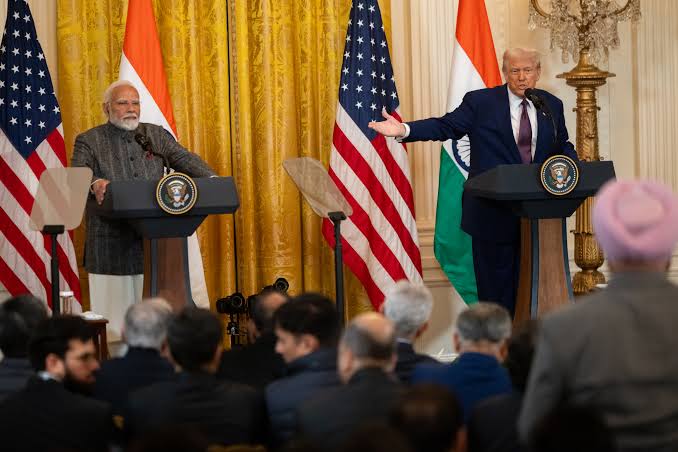
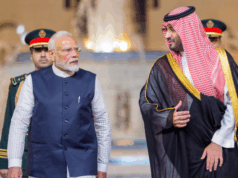
India–US ties deepened over years of strategic engagement, and was spurred by Prime Minister Modi’s proactive diplomacy. However, sustaining this partnership requires interactions based on Equality and mutual respect.
Today’s India asserts its interests with confidence rather than deference as shown by few others, ensuring the relationship remains equitable and grounded in realism. This probably has not been liked by Trump.
His imposition of sweeping tariffs on Indian goods, has shaken the partnership and reflects a unilateral and short-sighted approach of Trump that has not been ignored by
India.
Trump trying to equate Pakistan with India, risks weakening the USA overall strategic posture. As a rising power and a civilizational state, India will engage the world with vigilance and self-assurance—on its own terms and with strategic clarity and not by appeasement of any Power. Certainly the USA will not like getting equated with North Korea.
Thus despite unprecedented outreach earlier by both sides, India–US ties are under strain because of Donald Trump’s erratic diplomacy and strategic disregard. On August 11, 2025, Pakistan’s Army Chief General Asim Munir visited the United States—his second visit in less than two months. There the USA permitted him to make provocative threats against India from US soil.
Munir said “We’ll start from India’s East, where they have located their most valuable resources, and then move westwards,” indicating an intent to destabilize India’s eastern front. He, acting like a terrorist leader, issued nuclear threats, warning that Pakistan, as a nuclear-armed state, would take “half the world down with us”.
India’s Ministry of External Affairs responded by calling Pakistan an “irresponsible nuclear state” and stated: “Such nuclear sabre-rattling is Pakistan’s stock-in-trade. We deeply regret that such inflammatory and irresponsible rhetoric was aired on American soil.”
These developments highlight the ongoing strategic challenges India faces in maintaining a balanced relationship with the USA.
Pakistan’s ties with the United States significantly influence its posture toward India and have direct implications for India’s national security.
What has irked the USA the most is that prior to initiating Operation Sindoor, India did not inform even the USA and hammered Pakistan, a nuclear power State, very badly. India also outright refused any third party’s role when USA and few others started requesting for a ceasefire. The ceasefire came only when the Pakistani Director General Military Operations directly pleaded with the Indian DGMO for a cease fire.
In fact it is most likely that one of the PAF base which got damaged badly was getting readied by USAF for its own operations against Iran’ nuclear sites.This new complex geopolitical matrix clearly indicates that from now onwards USA just cannot use Pakistan as a pawn /military base for its own geopolitical needs.
While India is no more obsessed over Pakistan, it also cannot afford to be naïve or dismissive about developments that directly impact its security calculus. Maintaining strong and stable ties with the United States is part of Indian geopolitical interests.
However if the USA tries to manipulate these ties by propping Islamabad then India cannot remain silent about actions that directly undermine its regional interests. India too knows how to play geopolitics. President Putin’s forthcoming visit to India, PM Modi’s forthcoming visit to Beijing and similarly a visit by President Xi Jinping to Moscow will surely teach some geopolitics to Trump.
Since the beginning of his tenure in 2014, PM Modi has actively pursued diplomacy through personal visits and undertaken significant steps across multiple domains to strengthen strategic ties with the United States. A major friction had started over purchase of S400 missile defence system from Russia over inferior American systems but got downplayed because of QUAD. India purchased significant quantities of major defence items from USA too.
Bilaterally they signed several major strategic agreements, including LEMOA (2016), COMCASA (2018), and the Industrial Security Annex (2019)—an extension GSOMIA —which deepened defense-industrial cooperation and information sharing. Both advanced closer ties through initiatives such as the Indo-Pacific Maritime Domain Awareness (2022), iCET (2022), INDUS-X (2023), expanded space cooperation, and a sharper focus on Quad-led regional engagement. These continuous efforts transformed the India–US relationship into a comprehensive global strategic partnership spanning defense, technology, regional security, and global governance.
India is not a client state of the USA like a few from Europe but a rising global power with self-respect and strategic autonomy which makes its own calculated decisions in its national and geopolitical interests.
Even during the Biden administration, India continued to purchase discounted oil from Russia, maintained its longstanding defense relationship with Moscow and continued talking with China.
If the relationship is fraying today, the responsibility lies squarely with Donald Trump—who has repeatedly disregarded India’s core national security interests, made over 30 false claims that he brokered a ceasefire between India and Pakistan, and publicly targeted India through inflammatory rhetoric.
As a sitting US President Trump has repeated such a fabrication so many times, blatantly violating diplomatic norms in the process. Despite clear and consistent denials from India’s Prime Minister, External Affairs Minister, and Foreign Secretary, Trump persisted in spreading this falsehood. This is not mere misinformation—it erodes diplomatic credibility and mutual trust and shows Trump’s reckless approach to diplomacy.
Trump has now imposed a blanket 50% tariff on Indian goods, citing India’s continued purchase of discounted Russian oil. With this the Trump administration risks “wrecking America’s entire Asia strategy” and damaging American interests in the long term. Michael Kugelman, Director of the South Asia Institute at the Wilson Center, offered a stark assessment of the diplomatic fallout: “I think this is the worst crisis that the relationship has faced over the last two decades of strategic partnership.”
India’s has point blank refused to open up its dairy and agricultural sectors to full American market access because of its national economic security—India’s small and medium businesses, farmers, and vulnerable rural populations simply cannot withstand such asymmetric exposure.
The US has long demanded greater market access for its agricultural exports, including dairy, poultry, nuts, and grains, but India has consistently drawn a red line here, citing structural differences in farming practices and deep concerns over livelihood security.
PM Modi too has clearly stated “India will never compromise on the wellbeing of its farmers, dairy and fishermen. These sectors are non-negotiable. And I know personally I will have to pay a heavy price for it.”
Today, India a civilizational state with a deep-rooted identity, is the world’s most populated country, the largest democracy and the third-largest economy.
The Indian Ocean is named after it and now it is a major player even in the Indo-Pacific. India will thus engage with the world on its own terms—with consistency, principle, and long-term strategic vision.
India is going to regain its position as a great power and has all the courage to stand tall on the global stage.