
Indian Naval Communication Capabilities fully strengthened with GSAT-7R reaching final orbit
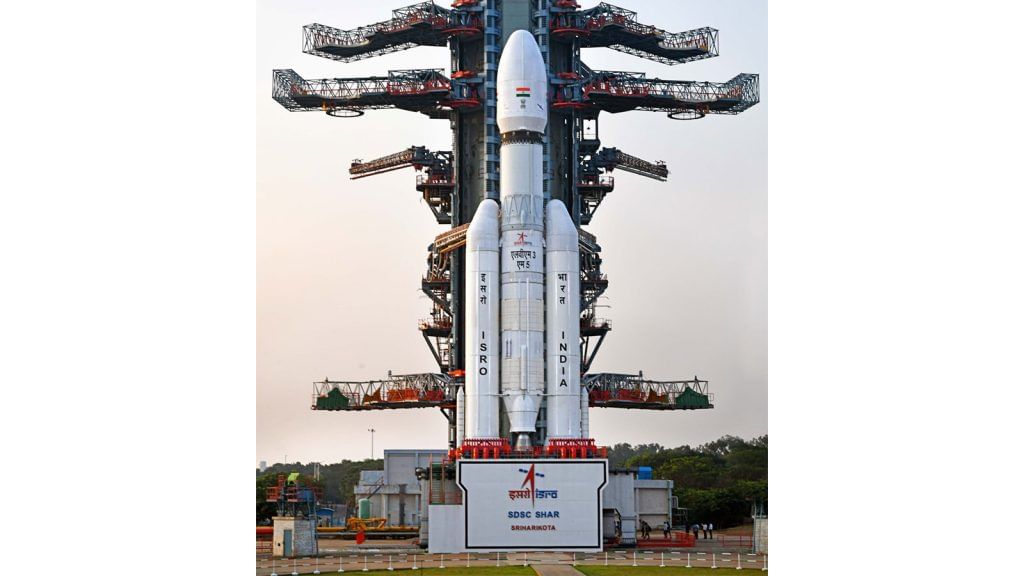
The Navy’s dedicated communication satellite, GSAT-7R (CMS-03), has successfully reached its final orbital position. Confirming the satellite’s transition, ISRO Chairman Dr. V Narayanan informed that the spacecraft is now securely positioned in a circular geostationary orbit around 36,000 kilometers above Earth.
GSAT-7R is the next-generation successor to GSAT-7 (Rukmini), launched in 2013, and it brings improved transponder power, higher bandwidth capacity, and greater regional coverage. It strengthens India’s secure communication architecture by offering redundancy, resilience, and advanced link encryption for defence networks.
The successful orbit-raising operation marks the culmination of several days of controlled manoeuvres following its launch aboard the LVM3 rocket from Sriharikota on Sunday, 2 November.
The GSAT-7R mission represents a critical enhancement in India’s maritime domain awareness and secure communication infrastructure.The satellite’s successful deployment enhances India’s strategic position in space-based naval communications and underlines ISRO’s growing expertise in deploying complex, defence-oriented communication platforms.
Designed for the Indian Navy, the satellite will provide dedicated bandwidth over the Indian Ocean Region (IOR), supporting ship-to-shore, ship-to-air, and ship-to-satellite communications with greater reliability and encryption security.
This capability will considerably improve operational efficiency and coordination among the Navy’s surface, subsurface, and aerial assets.
All communication satellites, including GSAT-7R, begin their journey in an intermediary orbit called the Geosynchronous Transfer Orbit (GTO). This highly elliptical trajectory serves as an initial stage before the satellite is elevated to its final operational altitude.
In GTO, the spacecraft’s distance from the Earth fluctuates between roughly 170 to 200 kilometres at its nearest point (perigee) and about 36,000 kilometres at its farthest point (apogee). Satellites typically spend a few days to a week in this transit phase before initiating orbit-raising burns using onboard propulsion systems.
Orbit raising is a vital process in satellite operations, ensuring that the spacecraft reaches a stable, circular orbit suitable for its intended purpose. By firing its onboard engines at specific points in the orbit, the satellite gradually circularises its trajectory, matching the Earth’s rotational speed.
Once in a geostationary orbit, the satellite completes one revolution every 24 hours—the same period as the Earth’s rotation—making it appear stationary when viewed from the ground.
The strategic altitude of 36,000 kilometres above the equator allows GSAT-7R to remain fixed over a particular longitude, ensuring uninterrupted coverage across the Indian landmass and the surrounding maritime zone. This stationary positioning is the principle behind the term ‘geostationary.’
It provides consistent communication links without the need for ground antennas to constantly track the satellite’s movement—a fact familiar to anyone using fixed satellite television antennae that always point toward a stable spot in the sky.
From this vantage point, GSAT-7R can service almost one-third of the Earth’s surface, including vast stretches of the Indian Ocean and adjacent maritime territories.
This extended reach is indispensable for India’s naval operations, which increasingly depend on satellite-enabled communication for real-time coordination of fleet movements, intelligence sharing, and disaster response missions.