
Jordan’s crackdown on migrants intensifies refugee hardship and economic strain
By Suraiyya Aziz
In late April 2025, Jordan’s Ministry of Labour announced the deportation of more than 3,000 foreign workers for violating labour laws. The move followed a sweeping wave of inspections that targeted non-citizens working without permits in domestic service, garment production, agriculture, and construction. Officially, the campaign sought to “restore order” in the labour market. But beneath this administrative veneer lies a story of social displacement, collapsing livelihoods, and the erosion of fragile refugee protections that had once been Jordan’s hallmark.
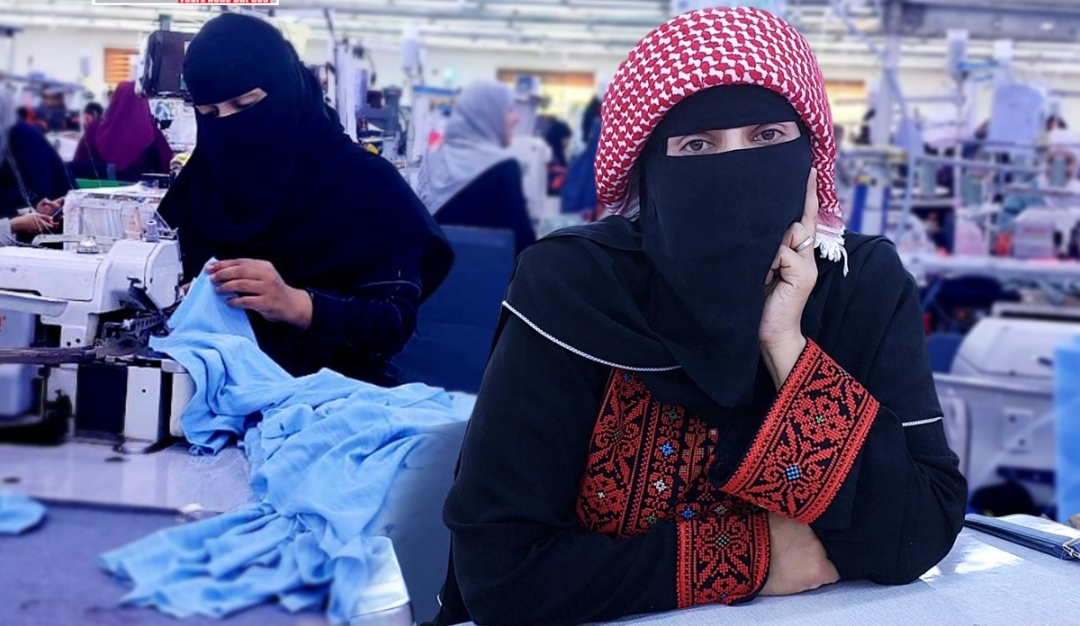
The inspection campaign, still ongoing months later, has shaken communities across the country. Business owners and workers alike describe a climate of fear and uncertainty. “We have seen waves of inspections before, but never of this duration and intensity,” said a Bangladeshi owner of a small clothing workshop in Ad-Dhulayl, a town northeast of Amman. “It seems that this time they are serious about wanting all foreign workers out of the country.”
Jordanian authorities have defended the campaign as a necessary measure to protect the national workforce, citing an unemployment rate exceeding 21% and soaring living costs. Yet, in practice, the campaign has pushed thousands of migrants and refugees deeper into poverty. Businesses employing non-citizens-many of them unlicensed-have shuttered, displacing both owners and employees. A fine of 800 Jordanian dinars (£833) per informal worker has made employing foreigners an unaffordable risk.
From Ad-Dhulayl’s main market street, the Bangladeshi workshop owner pointed to empty homes once occupied by Yemeni refugees and Egyptian labourers-families who had been deported. Others simply disappeared after word spread that inspectors were checking IDs door-to-door. The crackdown’s reach extends beyond undocumented workers; it touches refugees, asylum seekers, and even those with expired work permits, effectively criminalising the poor.
Jordan hosts one of the world’s largest refugee populations relative to its size. Over half a million registered refugees-mostly Syrians-reside in the country. Alongside them are thousands of Iraqis, Yemenis, Sudanese, and Somalis. Adding to this complex demographic are 2.5 million Palestinian refugees registered with UNRWA, as well as others unregistered but integrated into Jordanian society to varying degrees.
Officially, Jordan is not a signatory to the 1951 Refugee Convention, but a memorandum of understanding with the UNHCR outlines minimal protections, including the principle of non-refoulement. Yet these protections are increasingly undermined by shifting government priorities and the absence of clear legal frameworks. Refugees’ right to work depends on nationality, origin, and political circumstance, resulting in arbitrary and discriminatory practices.
For Syrians, the turning point came with the gradual dismantling of the Jordan Compact-a 2016 agreement that sought to integrate Syrian refugees into the workforce in exchange for international aid and trade concessions. The Compact had once been hailed as a model for refugee economic inclusion, granting Syrians low-cost work permits and access to certain formal sectors. But by 2024, as international attention shifted to newer crises in Ukraine, Sudan, and Gaza, donor funding began to dry up.
Then, in early 2025, the Trump administration’s decision to cut $3 billion in USAID funding-of which Jordan was a major recipient-delivered a severe blow. Without the financial incentives tied to refugee hosting, Amman saw little reason to maintain the costly infrastructure that supported Syrian employment. Work permit fees were raised sharply, social security contributions reinstated at full cost, and retroactive payments demanded.
A Syrian woman living in Amman described the new reality: “We didn’t know [the permits] would become a burden, like taking a loan from a bank with accumulating interest. We don’t apply for permits anymore because we have become afraid of scams and accumulating fees.”
The erosion of Syrian privileges represents not only the failure of the Jordan Compact but also a larger retreat from humanitarian commitments. The compact’s promise-to turn refugee hosting into a development opportunity-proved illusory. Even at its height, few Syrians secured stable, formal jobs. Most remained in informal employment, trapped in low-paying and insecure conditions.
Today, the exceptions that once shielded Syrians from deportation are vanishing. Inspections and arrests have increased, and deportations of non-Syrian refugees-especially Sudanese, Yemenis, and Somalis-have become more frequent. In 2019, the Jordanian government ordered the UNHCR to suspend new registrations for non-Syrian asylum seekers, leaving new arrivals without legal status.
For many, the choice is impossible: to apply for a work permit and lose UNHCR protection and eligibility for third-country resettlement, or to remain undocumented and risk arrest. “These groups are no longer welcome,” said one aid worker in Amman. “The message from the authorities is clear: Jordan is closing its doors.”
Among the most acutely affected are ex-Gazans-Palestinians who fled Gaza after 1967 and remain stateless. Long treated as a special category within Jordan’s refugee population, they were once exempt from the strictest labour restrictions. But since 2016, even ex-Gazans have been required to obtain work permits for private sector employment. This bureaucratic shift has compounded their exclusion, making it nearly impossible to find legal employment or pursue higher education.
The result is a labour market divided along rigid nationality lines, where some refugees can work in certain sectors while others are barred entirely. These divisions have fostered resentment and intensified competition for scarce jobs.
The intersection of legal precarity and racial discrimination has produced a deeply stratified labour market. Refugees from East Africa, Yemen, and South Asia fill low-wage, insecure jobs as cleaners, construction workers, and domestic labourers. Women from Sudan and Somalia often work in beauty salons, where employers take a large cut of their earnings.
One Sudanese woman, Aziza, described how she was pushed into self-employment: “After working in several beauty salons in Amman, I decided to work from home or visit clients. I’ve built a network of Jordanian women who invite me to weddings to offer henna designs.”
Others face overt racism. A 25-year-old Sudanese man recalled being hidden from restaurant customers: “My manager didn’t want me in the dining area because of my skin colour. He said customers wouldn’t like it.”
Such accounts reveal how deeply racism is embedded in Jordan’s employment structures. It not only determines who gets hired but also how much they are paid and where they are allowed to work. The resulting racial segmentation is self-reinforcing, making it nearly impossible for refugees to escape the lowest rungs of the economic hierarchy.
When the Jordan Compact was introduced, it was celebrated as a breakthrough in global refugee policy-a rare alignment of humanitarian and economic goals. It promised tariff-free access to EU markets for Jordanian exports if garment factories employed at least 25% Syrian workers. The hope was to transform the “refugee crisis” into an engine of growth.
In reality, few employers embraced the plan. Factory owners, operating under the Jordan-US Free Trade Agreement, preferred to hire South and Southeast Asian workers, whom they considered more “productive” and compliant. Recruitment drives targeting Syrian women faltered; many found the conditions intolerable-low wages, long commutes, and limited childcare options.
Nine years later, the compact stands as a cautionary tale. The garment sector remains dominated by migrant women from Bangladesh, Sri Lanka, and Nepal. Syrians, once at the centre of the policy experiment, have largely exited the sector or shifted into informal work. The EU trade incentives failed to offset the social and cultural barriers that kept Syrians from factory floors.
The recent deportation campaign has amplified this insecurity. Inspections now target the neighbourhoods surrounding industrial zones where most refugees live. In these dense, low-income districts, police patrols and raids are frequent. Refugees from East Africa and Yemen report avoiding public spaces and reducing their movements to evade arrest.
Ikhtyar, a Yemeni community leader in Amman, described the toll: “Some people stopped working altogether, went into debt just to survive. Families have been separated. I know of cases where a father or mother was arrested at work, and after prison, deportation was the only outcome.”
The fear extends to Syrians as well. Rising permit fees and reduced job opportunities have led some to consider returning to war-torn Syria. “For the first time since I fled in 2013, I don’t feel welcome here anymore,” said a Syrian mother of three. “Even in the factory, people ask when I’ll return home.”
On May 29, 2025, the Ministry of Labour announced an immediate suspension of all new foreign worker recruitment and promised to continue its campaign against irregular labour. Yet behind closed doors, negotiations persist between the government and employers in sectors reliant on migrant labour. The truth is that Jordan’s economy depends on the very workers it is expelling. Without them, construction, agriculture, and garment production would grind to a halt.
Officials may frame deportations as a path to lower unemployment, but there is little evidence that Jordanian citizens are stepping into these jobs. Low wages, difficult conditions, and social stigma continue to deter local participation. As one economist in Amman put it: “Migrant labour leaves today, but it will be back tomorrow-because the system itself depends on it.”
Meanwhile, international assistance to refugees in Jordan has dwindled. Once a major hub of humanitarian funding, the country now receives a fraction of what it did five years ago. Cash aid, food vouchers, and job creation programmes have been scaled down or shut altogether. As donor fatigue sets in, refugees are left to fend for themselves in an increasingly hostile environment.
In the absence of institutional support, refugee communities are relying on solidarity networks and mutual aid. Families share housing and food to survive. Yemenis have launched community-led fundraising drives to pay for return flights to Yemen. Syrians send remittances to relatives who have returned to rebuild their homes.
These acts of resilience, however, cannot substitute for policy. Jordan’s crackdown, coupled with international disengagement, risks creating a humanitarian crisis in slow motion. Refugees are being pushed to the margins, forced to choose between living in fear or returning to danger.
Jordan’s deportation campaign has laid bare the contradictions of its refugee policy. It is a policy that publicly upholds international protection while quietly dismantling it through bureaucratic and financial pressure. It is a policy that promises national employment but depends on the continued exploitation of foreign labour.
As refugees pack their belongings and small workshops shutter across the country, one thing becomes clear: deportations may reduce the visible presence of foreign workers, but they do not address the root causes of Jordan’s economic malaise. Instead, they deepen inequality, fuel xenophobia, and strip away the fragile social fabric that once made Jordan a relative haven in a turbulent region.
For the millions who remain-Syrians, Yemenis, Sudanese, and others-the future in Jordan grows increasingly uncertain. In the absence of renewed international engagement and a more humane domestic policy, the promise of safety and stability that once defined Jordan’s role in the region risks fading into memory.
Blitz