
Long-Pending overhaul of DRDO to be completed by Jan 2026 deadline
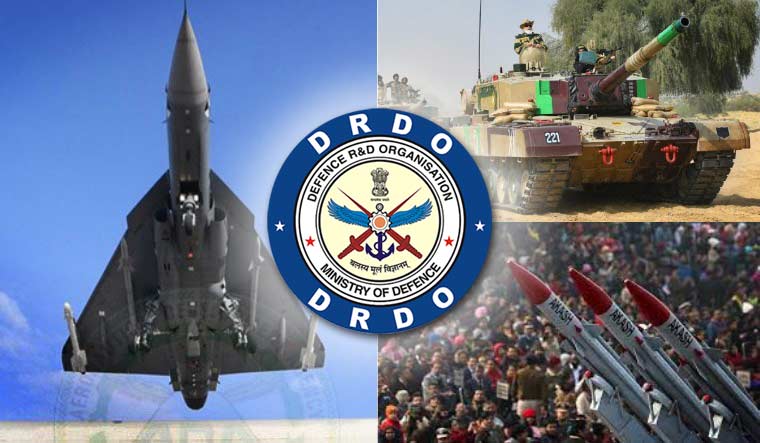
The PMO has firmly stated that the restructuring plan for the DRDO must be executed before its 68th Foundation Day on January 1, 2026. With this the reforms that were pending for nearly two years are now moving at speed, marking a decisive effort to give India’s defence research establishment a sharper, more future-ready identity.
The long-delayed restructuring of the Defence Research and Development Organisation (DRDO) is now on track under direct supervision from the Prime Minister’s Office (PMO). After nearly two years of bureaucratic stagnation, a comprehensive reform plan—originally proposed in late 2023—is now being executed with speed.
The reform plans are based on the 2023 recommendations of a high-level nine-member committee led by former principal scientific advisor Prof. K VijayRaghavan. The report, titled Redefining Defence Research and Development, highlighted structural inefficiencies within DRDO and proposed a roadmap for improvement. However, the suggestions faced resistance from within DRDO, but now renewed push from the PMO has overcome this inertia.
The VijayRaghavan committee had identified that nearly 60% of DRDO’s project delays stem from internal shortcomings such as the absence of critical technologies at vital stages of development. Additionally, 17-18% of delays were attributed to frequent requirement changes by the armed forces, who often revise specifications midway, while another portion was linked to bureaucratic bottlenecks. This analysis underscored the urgent need for structural reform.
A senior Indian Foreign Service (IFS) officer now in the PMO has been entrusted by the PMO to implement long-pending changes in this premier defence R&D agency. This official has previously been instrumental in the restructuring of the Indian Space Research Organisation (ISRO) and the Bhabha Atomic Research Centre (BARC), giving him crucial experience in managing reforms within large science and technology establishments.
While ISRO’s transformation was driven primarily by the need to enable private sector innovation, reduce institutional burden and capture a larger share of the global space economy, the reforms at BARC focused on decentralisation, security upgrades and operational streamlining, given the sensitivity of the nuclear domain. Similarly, the DRDO overhaul aims to make the institution leaner, accountable, and strategically agile without compromising its critical national security role.
The restructuring plan envisions DRDO being reorganised around two principal verticals. The Department of Defence Science, Technology and Innovation (DDSTI) will focus on fostering defence R&D in academia, universities and the start-up ecosystem, while also acting as an industry interface. The other vertical will be led by the DRDO Chairman, who continues as the secretary (R&D) in the Ministry of Defence, overseeing core weapon development laboratories.
Under the new structure, the DDSTI will supervise key autonomous agencies such as the Aeronautical Development Agency (ADA), Centre for Military Airworthiness and Certification (CEMILAC), Society for Integrated Circuit Technology and Applied Research (SITAR), and the Gallium Arsenide Enabling Technology Centre. Meanwhile, DRDO’s core laboratories—engaged in aero engines, radars, missiles, avionics and electronics—will remain under the DRDO chairman.
The committee further recommended a consolidation of DRDO’s 41 laboratories into 10 national laboratories located across Delhi, Pune, Visakhapatnam, Chandigarh, Dehradun, Chennai, and two each in Hyderabad and Bengaluru.
This move seeks to rationalise resources, avoid duplication of work, and spread R&D benefits across regions.
Another major initiative is the planned creation of four national test facilities, which will also be accessible to private firms. This aligns with the government’s 2022 decision allowing Indian defence firms to use DRDO infrastructure in order to cut down on capital expenditure and accelerate indigenous development. By providing access to advanced testing infrastructure, the government aims to strengthen the public-private defence R&D partnership and encourage industry-led innovation.
The committee observed that nearly half of DRDO’s R&D budget was historically concentrated in just two laboratories in Hyderabad and Bengaluru, creating regional imbalances and favouring a small ecosystem of scientists, MSMEs and suppliers. This concentration restricted nationwide participation in defence research. The consolidation of labs and establishment of national facilities across the country are designed to correct this imbalance.
On the administrative side, overlapping departments such as the Directorate of Personnel and the Directorate of Human Resource Development will be merged, ensuring greater efficiency in manpower planning and training. Additionally, the committee recommended a possible bifurcation of the DRDO chairman’s dual role as secretary-R&D, in order to improve accountability and create clear chains of responsibility.