
Mexico plans to follow US in raising tariffs on Chinese goods
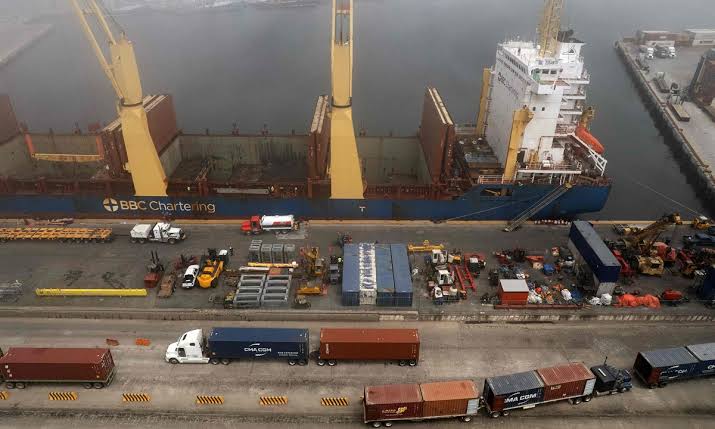
This aerial view shows the Port of Ensenada in Baja California state, Mexico
The Mexican government plans to increase tariffs on China as part of its 2026 budget proposal next month, protecting the nation’s businesses from cheap imports and satisfying a longstanding demand of the US, Bloomberg reported on Thursday. The report was attributed to three people familiar with the matter, but Bloomberg did not disclose their identities.
The tariff hikes, expected for imports including cars, textiles and plastics, aim to shelter domestic manufacturers from subsidized Chinese competition, according to three people briefed on the matter, who asked not to be identified revealing details of the plans, per Bloomberg.
While the sectors reportedly targeted are precisely those where China holds strong competitiveness in global supply chains, other Asian countries are also expected to face higher tariffs, one of the people said, according to the report.
Mexico, as a key member of the World Trade Organization (WTO), is obliged under the WTO framework to extend most-favored-nation treatment by granting equal tariff arrangements to all members — a basic norm of international trade.
If the report is true, such a move shows that the US is not only undermining multilateral rules, but also pressuring other countries to abandon the fundamental principles of international trade cooperation.
Although Bloomberg said the tariff rates were not yet clear and the plan could still change, it’s clear that since the beginning of this year, the US has been pressuring its largest trading partner, not only Mexico, to follow the country in imposing higher tariffs on Chinese imports.
On late February this year, US Treasury Secretary Scott Bessent encouraged Canada to follow Mexico in matching US tariffs on Chinese goods, according to Reuters.
US tariffs already undermine multilateral rules, and dragging other countries into breaking trade norms is a self-serving move that harms others and runs counter to the very logic of international economic cooperation.
On July 31 local time, the US decided to extend its tariff agreement with Mexico for 90 days, maintaining a 25 percent tariff on Mexican goods outside the United States-Mexico-Canada Agreement (USMCA). In addition, Mexican products face a 25 percent tariff on cars made in Mexico and a 50 percent rate on aluminum, copper and steel, according to the New York Post.
As a developing country, Mexico should understand that development is at the core of its economic policies to boost market confidence and foster effective international cooperation. Increasingly dependence on the US would risk greater economic coercion and trade bullying in the future.
China has made clear its strong condemnation of the US’ coercive practices.
In response to a media inquiry on China’s comment on the US’ move to nudge Mexico and Canada to match tariffs on China, Chinese Foreign Ministry spokesperson Lin Jian said in a press conference on March that “as we have said more than once, trade and tariff wars have no winners. Snuffing out others’ candles does not bring light to oneself.
WTO rules and principles of market economy should be observed by all. If there are any concerns, they should be solved through dialogue and consultation with equality and mutual respect. Countries need to come together to address unilateralism and trade protectionism.”
Chinese experts have warned that if the US continues to press for such measures, it would not only weaken Mexico’s ability to attract foreign investment and tap global resources, but also risk triggering retaliatory actions from other countries.
“Global trade cannot develop on the basis of unequal tariffs and discriminatory treatment, and no single country can unilaterally provide sustainable growth opportunities for others,” said an expert.
China is Mexico’s second-largest trading partner globally, while Mexico is
China’s second-largest trading partner in Latin America.
According to China’s General Administration of Customs, bilateral trade between China and Mexico reached $109.426 billion in 2024, with Chinese exports totaling $90.232 billion and imports standing at $19.195 billion.
Imports from China have played a key role in supporting Mexico’s manufacturing growth and strengthening its foreign trade competitiveness, while delivering tangible benefits to people in both countries.
At international exhibitions this year involving Chinese and Mexican companies, more Mexican firms have expressed willingness to work with Chinese partners to upgrade their business amid rising global uncertainties.