Mirpur Massacre: Towards an Honest Reckoning
By Colonel Satish Singh Lalotra
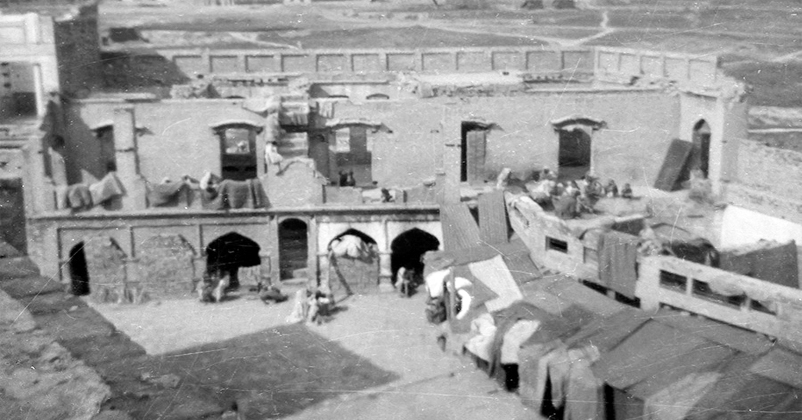
‘Failure is a temporary state, where most valuable lessons are learnt’—This single sentence in itself encapsulates a world of wisdom. Failure cannot be a perpetual state of being whether for an individual or for a nation state. An interim stage that has within itself myriad lessons for imparting to a targeted entity, failure in itself is the stepping stone for things to improve. The partition of India that was supposed to usher in a relative era of peace & tranquility unfortunately was succeeded by an unprecedented orgy of mayhem that still carries its festering wounds in almost all nooks and crannies of this sub-continent. The tragedy of typical ‘state failure’ metamorphosing into one of the worst human sufferings that India saw, unfolded into ‘Mirpur massacre’ on 25th November 1947; exactly seventy eight years ago in the northern most part of India i.e. Jammu & Kashmir. The final capitulation of Mirpur town in the erstwhile princely state of J&K on 25/26 th November 1947 to Pakistan based tribal lashkars was followed by one of the largest killings and abductions of civilians in the entire gamut of Indo-Pak imbroglio. Yet, beyond the usual rhetoric and horror of those days, ‘Mirpur massacre’ stands out for another reason-it is a ‘textbook case’ of how ‘weak state leadership’, ‘delayed decisions’, and ‘broken civil-military coordination’ can wreak havoc leading to convert a manageable threat into a humanitarian disaster whose reverberations can still be found echoing across the globe from England to India. The massacre and the mass captivity of Mirpur’s residents were not inevitable. They were enabled by failures of anticipation, planning, reinforcement and finally evacuation.Seventy eight years later as the day is rung across the globe in the form of ‘Mirpur day’ , the displaced community still questions —‘ Could Mirpur have been saved? The obvious answer could have been a resounding ‘Yes’ provided all the reasons as enumerated above dealt head on by the then leadership of the day. Every conflict has its heroes and villains. Remembering ‘Mirpur massacre’ does not diminish or loosen the sheen displayed by the soldiers and civilians alike who went beyond the call of their duty to protect their garrison town , rather it honours them by demanding accountability from those who could have been the proverbial ‘last man standing’ between an ‘abject surrender’ & a ‘resolute defence’. A mature society does not bury its painful past histories, but confronts them & learns from them so as to caution its future progenies from such a catastrophe. Mirpur deserves such honesty. The tragedy of Mirpur town and its surroundings wasn’t just about being overwhelmed by sheer weight of tribal lashkars, it was about being unprepared as rest of the towns of the princely state of J&K at that time were from the impending doom . On top of the heap of this unpreparedness was the overlooking of ‘intelligence signals’ that were constantly pointing towards influx of armed groups, the seizure of villages around Bhimber and the fall of Jhelum valley settlements. Indicators of a coordinated offensive from the west. Yet the leadership of the day were gridlocked into an ecosystem of politico- military paralysis.Though the aim of my writing this article is not centering on the military manoeuvre undertaken by both the state forces as well as civilian volunteers in saving Mirpur town , a bit of town’s defensive layout as it existed during the grim days of October/ November 1947 will not be out of context to help readers assimilate as things stood out .Mirpur defended by the ‘Mirpur brigade’/ state forces of Jammu & Kashmir consisting of 3 J&K rifle under command Lt Col Thapa was multi-layered in its deployment with outer pickets established along Jatlan, Kasguma and Jandiwal.The inner defensive line was centered onMirpur town itself. The fall back positions were further tucked inside the town itself. Mirpur’s ridges, nullahs, and the ‘Dhudhi nala’ in particular were used as natural obstacles to take on the enemy. The critical moments of the defence of Mirpur town can be time lined from early November 1947 with the stout resistance put up by the state forces in the ‘battle of Jatlan-Kasguma’, followed by the ‘break of Jandiwal picket on 22 November 1947 with the final blow coming on 25/ 26 November 1947. A bustling trading center with a population of around 3.85 lakhs as per the 1941 census it had more than 80 percent Muslim and appx 16 percent Hindu population with the latter centered in and around the Mirpur town engaged in trading activities. The town per se had about 25,000 to 30,000 Hindus &Sikhs , and strategically placed 32 kms from Jhangar, 55 Kms from Nowshera, and 120 kms from Akhnoor; plus directly connected to Jammu through the old Mirpur-Jammu route. Reverting back to my original question put up in this write up on the eve of ‘Mirpur day’—‘could Mirpur be saved from the tribal lashkars in November 1947 ? The answer lies in the labyrinthine of options that were available to the politico-military combine of that time , but exercised wrongly. By late October 1947, J&K was in a state of existential crisis with Baramulla, Uri and Srinagar almost having gone into the laps of tribal lashkars. With Mirpur having a robust connection with towns like Muzaffrabad that had been overrun by tribal lashkars, residents of the town sensed the impending doom. With Bhimber having fallen too , refugees pouring in from surrounding areas and local defence volunteers gathering info pointing to a human catastrophe breaking over Mirpur any time since the route to Mirpur now lay open, the warning signals couldn’t have been more explicit . Yet the leadership of the day from New Delhi to Srinagar blatantly ignored these warning signals; submerged as they were in saving the proverbial ‘Jewel of J&K’ aka Srinagar and its surroundings.With Sheikh Abdullah at the helm of the affairs in Srinagar, heading the de facto ’emergency administration’ consequent to signing of the instrument of accession by the Maharaja , the skewed priorities of the former in stabilizing governance in the valley, building political legitimacy, controlling communal tensions as well as managing supply, hospitals, and refugee influx into central Kashmir pushed Mirpur away from the thinking radars of both the leaderships at Srinagar and New Delhi. The bureaucratic freeze both at New Delhi & Srinagar can be gauged from the fact that Mirpur’s defenders sent numerous urgent ‘flash messages’ on 24/25 November 1947 stating —ammunition nearly finished, enemy surrounding from all directions, urgent reinforcements required etc but to no avail. A relief columnof 50 (independent) Para brigade from Jhangar only 32 kms away could have reached Mirpur within 6 to 8 hours, but the move order was delayed partly due to the brigade having overstretched itself and secondly the units being understaffed at that point of time. To further queer the pitch, repeatedly both Nehru & Sheikh Abdullah were told that since Jhangar was still holding and Nowshera being stable Indian troops would soon secure entire Jammu province. This was further exacerbated by three command lines as they existed at that time-Indian army HQ (Jammu Div & Sri Div), J&K state forces HQ and finally the emergency administration led by Sheikh Abdullah. By the time India realized the actuals on ground, Bhimber was lost, routes were cut and the enemy knocking on the doors of Mirpur town. As far as the first PM Nehru’s role in this whole episode is concerned , he was more concerned about the international optics of India’s express intervention in J&K & wanted India’s action to be viewed from the prism of a defensive strategy limited to strictly in response to accession plus respectful of Kashmir’s political aspirations.
As if this was not enough, the poor civil-military disconnect resulted in poor refugee management who in thousands had arrived in Mirpur from surrounding villages. Overburdened resources, lack of food, and no systematic evacuation plan worsened the tragedy when attack finally came on Mirpur. Finally the overreliance on weak state forces garrisons, though brave and committed put the seal of finality signaling death &n destruction. ‘Bal K Gupta in his book-‘Forgotten atrocities: Memoirs of survivor of the 1947 Partition’ was witness to the events that unfolded in the Mirpur Town during those fateful days of November 1947.The author relays a day to day account of events, and loss of family members either due to tribal lashkars or in the heavy Pakistani artillery barrages. Author ‘Anchal Malhotra’ in her book-Remnants of separation’ interviewed Ajit Kaur who came from Mirpur to Jammu in a state of pregnancy and passed forests infested with these tribal lashkars giving birth enroute and had to cut the umbilical cord of her child with the sword of her husband. Less said about the refugees who were taken in by the Pakistani army and herded like animals in the ‘Alibeg prison. Suffice it to say that the trials & tribulations of the Hindu & Sikhs alike were of no consequence to the likes of Sheikh Abdullah & Nehru who viewed happenings in Jammu province with their jaundiced eyes. The Mirpur Garrison did not fail-it was failed by a combined politico-military leadership of that time, whose echoes can still be felt on this day of celebration aka ‘Mirpur Day’. The Government of J&K in memory of those 18,000 Mirpuricitizens killed in November 1947 constructed a memorial called-‘Mirpur Shaheedi Samark’ located at Maheshpura chowk , Bakshinagar near the Jammu Medical college years back. It is a memorial where the few survivors and their descendants of that carnage congregate to relive their memories and pay respect to those who fell to the unholy nexus of the Pakistan government and the tribal lashkars on that fateful day of 25 th November 1947. It is also a tribute to the state forces of J&K who though outnumbered, outgunned and unsupported displayed unstinting loyalty and remain a testament to the battle field grit of Dogra soldiers and local volunteers who defended Mirpur till their last breath. Let the nation state of India bear this tragedy on ‘Mirpur day’ in its very being so as to not abandon its citizens when danger to their lives was at its zenith.