
Myanmar’s military raids massive cybercrime compound, seizes Starlink devices and arrests over 2,000
By Abul Quashem Joarder
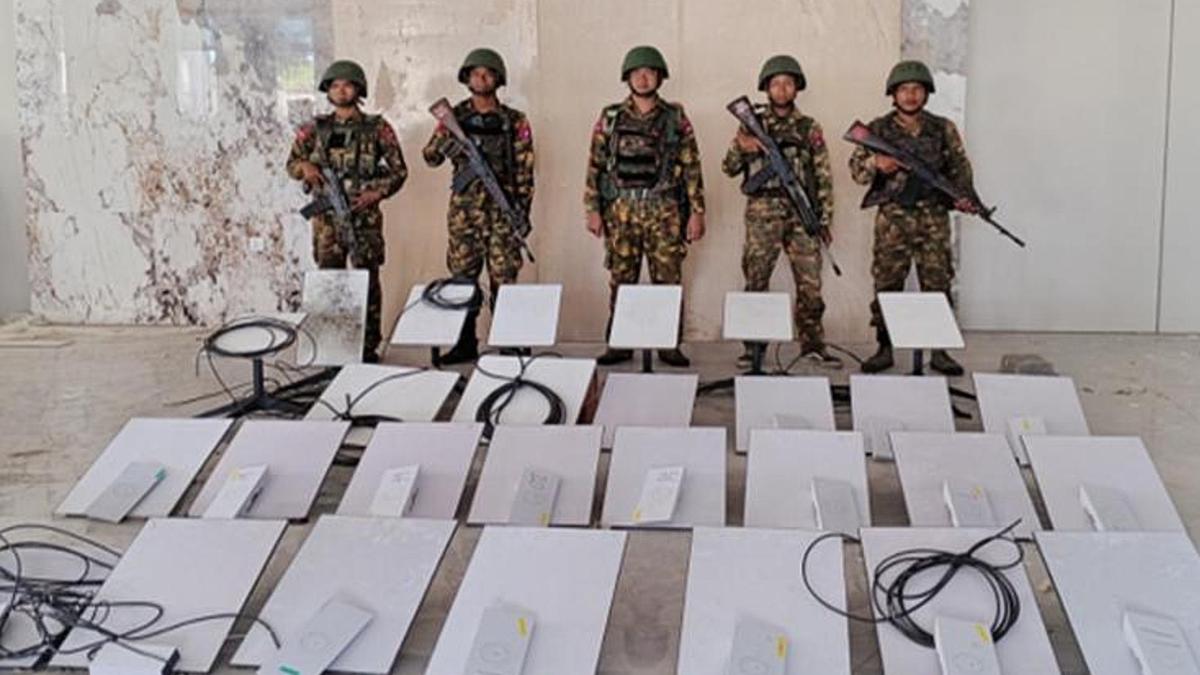
In one of the largest crackdowns on cyber fraud in Southeast Asia, Myanmar’s military has arrested more than 2,000 people and seized dozens of Starlink satellite receivers in a major raid on a massive scam compound along the country’s border with Thailand. The operation, which took place at the notorious KK Park complex, exposes the immense scale of cyber fraud networks that have flourished amid Myanmar’s post-coup chaos – and raises serious questions about the junta’s own ties to these operations.
According to state-run Myanmar Alin Daily, the raid resulted in the arrest of 2,198 individuals and the confiscation of 30 SpaceX Starlink terminals. These devices, which provide high-speed satellite internet access, have been instrumental in keeping scam networks operational even in remote border areas where traditional communications infrastructure is unreliable or heavily monitored.
The military described KK Park as a sprawling complex used by transnational criminal syndicates engaged in human trafficking, money laundering, and online scams. These scams, often dubbed “pig butchering” schemes, lure unsuspecting victims across Asia through fake romantic relationships or fraudulent investment opportunities – draining bank accounts and digital wallets in the process.
The sheer scale of KK Park underscores the industrial-level organization of such criminal hubs. The compound reportedly included ten completed one-story buildings, 100 two-story buildings, 20 four-story buildings, two five-story buildings, 20 one-story shophouses, 30 two-story shophouses, 15 one-story garages, 20 two-story garages, 20 four-story garages, 21 two-story buildings under construction, 10 three-story buildings, five four-story buildings, five five-story buildings, and two one-story dispensaries.
Despite its immense size and complexity, authorities found that none of these structures had official permits, construction approvals, or ownership documentation. Reports indicate that construction of KK Park began in 2020 and continued after Myanmar’s 2021 military coup, when state oversight disintegrated and large swathes of territory fell into lawless control.
The activist group Justice for Myanmar has previously identified KK Park as one of dozens of scam compounds that proliferated in the aftermath of the coup. These compounds, often situated in remote or semi-autonomous regions along the Thai-Myanmar border, provide criminal networks with a combination of isolation, local protection, and easy access to cross-border movement.
Data from the Australian Strategic Policy Institute (ASPI) reveals that since 2021, the number of scam compounds on Myanmar’s border with Thailand has nearly tripled – rising from 11 to 30 – and that these sites have collectively expanded by about 13.5 acres per month over the past four years. Many are located in areas nominally controlled by ethnic militias or local business groups with ties to both the junta and Chinese organized crime syndicates.
The syndicates’ operations are fueled largely by human trafficking. Thousands of people from across Asia – including Thailand, Malaysia, China, the Philippines, and even as far away as Africa – are lured by legitimate-looking job advertisements promising lucrative IT or call center work. Upon arrival, they are held against their will in guarded compounds, their passports confiscated, and forced to participate in online scams under threat of violence.
Investigations by rights groups and journalists have revealed widespread torture, sexual abuse, and even killings within these compounds. Victims are often forced to defraud others through social media and messaging platforms, learning scripts to manipulate their targets emotionally and financially.
While Myanmar’s state media has touted the recent raid as a triumph against criminal syndicates, international observers remain skeptical. The junta, which has struggled to assert control across much of the country since seizing power in 2021, has been accused of tolerating – and in some cases directly benefiting from – the cyber scam industry.
In May 2024, the US Treasury Department sanctioned the Karen National Army (KNA), labeling it a “transnational criminal organization” and freezing the assets of three of its senior leaders. The sanctions followed reports that the group and its affiliates were profiting from scam operations along the Thai border.
A separate investigation by Deutsche Welle earlier this year revealed that troops from the Karen Border Guard Force (BGF) – a militia aligned with the Myanmar military – had been providing security at KK Park. According to the report, BGF soldiers guarded entry points, prevented victims from escaping, and collected protection money from operators inside the compound.
This revelation has led many analysts to interpret the junta’s recent raid as a performative gesture designed to deflect international criticism rather than a genuine effort to dismantle the criminal networks. As Justice for Myanmar noted, the timing of the raid – following mounting international pressure on Naypyidaw to address human trafficking and cyber fraud – suggests it may be an attempt to appease foreign governments and improve the junta’s tarnished image.
The United Nations has warned that cyber scam operations centered in Southeast Asia have become a global criminal crisis. A 2024 UN report estimated that such operations siphoned between $18 billion and $37 billion from victims across East and Southeast Asia in the past year alone. The victims come from countries including China, Vietnam, Indonesia, Malaysia, and even Taiwan, many of whom have been devastated by financial ruin and psychological trauma.
Moreover, the widespread use of Starlink terminals has added a new dimension to the problem. Satellite internet allows criminal enterprises in isolated regions to maintain constant connectivity, operate multiple scam rings simultaneously, and evade detection by authorities. While SpaceX has stated that it prohibits illicit use of its technology, enforcement remains a challenge in territories where state control is fragmented or complicit.
Despite the scale of arrests, questions remain about what will happen to the 2,198 people detained. Among them are believed to be both perpetrators and victims – many of whom were trafficked into Myanmar and forced into the work under duress. Human rights groups have called on the junta to distinguish between traffickers and victims and to allow international humanitarian organizations access to the detainees.
Given the junta’s opaque justice system and history of abuses, there is widespread concern that the victims may face punishment or exploitation instead of assistance and repatriation.
While the KK Park raid may represent one of the largest actions against scam compounds to date, it is unlikely to mark the end of Myanmar’s cybercrime epidemic. As long as corruption, armed conflict, and international isolation persist, the borderlands will remain fertile ground for criminal networks that thrive on human misery and digital deceit.