Nepal’s former speaker charged with gold smuggling by interim government
By Anand Sharma
Nepal’s political landscape has been jolted by the dramatic arrest and formal charges against former Speaker of Parliament Krishna Bahadur Mahara, who now stands accused of gold smuggling and organized crime. The case marks the first major corruption prosecution under Nepal’s newly-installed interim government, which took office amid nationwide upheaval and promises of reform.
The 66-year-old veteran politician, once a prominent figure in the ruling Communist Party of Nepal (Maoist Center), was formally charged on October 13 for his alleged involvement in smuggling gold worth over 85 million Nepali rupees-equivalent to around $600,000-into the country.
The charges, confirmed in court documents seen by the Organized Crime and Corruption Reporting Project (OCCRP), represent a significant moment in the interim administration’s effort to restore public faith in governance after weeks of chaos that left the country on edge.
Mahara’s indictment comes roughly a month after mass protests forced the collapse of the previous administration, accused of endemic corruption, nepotism, and disregard for democratic accountability. The so-called “Gen Z” protests, led predominantly by young Nepalis frustrated by years of economic stagnation and political dysfunction, erupted after a government decision to ban social media platforms. The ban-initially justified as an effort to curb misinformation-backfired spectacularly, sparking outrage and drawing hundreds of thousands into the streets.
The demonstrations quickly transformed from digital rights protests into a broader anti-corruption movement. Protesters stormed parliament, clashed with security forces, and even attacked the homes of senior politicians.
At least 76 people were killed and more than 3,300 injured in the unrest. The scale of the violence and the depth of public anger ultimately forced Prime Minister Pushpa Kamal Dahal Prachanda’s coalition government to resign, paving the way for the appointment of an interim cabinet tasked with cleaning up the system.
Om Prakash Aryal, the interim Home Affairs Minister, vowed upon taking office that “no one, no matter how powerful, will be shielded from accountability.” Speaking to reporters last month, Aryal hinted that several “high-profile arrests” were imminent in relation to financial crimes that had been deliberately stalled under previous governments. Mahara’s arrest appears to be the first step in making that promise a reality.
According to investigators, the case against Mahara stems from a 2022 incident in which police seized nine kilograms of gold concealed inside hundreds of e-cigarettes at Kathmandu’s Tribhuvan International Airport. The gold, smuggled in by a Chinese national traveling from Dubai, was discovered in two suitcases containing 730 vape devices, each filled with small gold bars instead of liquid cartridges.
Police say Mahara and his son, Rahul, used their political connections to pressure customs officials to release or auction the seized contraband. At the time, Mahara denied any involvement and was briefly detained but later released on bail, with the investigation largely stalling under political influence.
Now, under the new government’s anti-corruption push, prosecutors have revived the case with fresh evidence. Court filings allege that Mahara “knowingly facilitated the illegal import and attempted laundering of gold” through intermediaries and misused his authority to obstruct the investigation. Authorities are seeking a three- to five-year prison sentence, along with the recovery of roughly $600,000 in illicit gains.
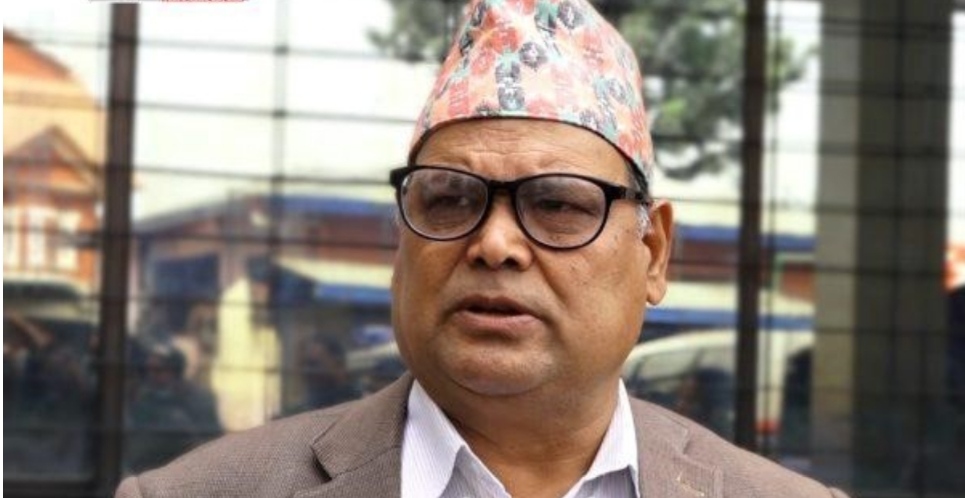
Appearing in court on October 13, Mahara reportedly looked tense but defiant. Dressed in traditional attire-a white shirt, black striped blazer, and a Dhaka topi-he told the court, “I have no involvement in the illegal import of the gold.” His defense argues that the charges are politically motivated, timed to portray the interim administration as tough on corruption.
The case has sharply divided Nepal’s political class. Dev Gurung, a senior Maoist Center member and longtime ally of Mahara, described the revival of the gold smuggling case as “deeply troubling,” warning that “political revenge should not be carried out under the guise of legal procedures.” Several other party figures have echoed Gurung’s sentiment, suggesting the new government may be seeking to weaken rival factions within the leftist movement.
However, public sentiment appears overwhelmingly supportive of the prosecution. For many Nepalis, the Mahara case symbolizes years of impunity enjoyed by powerful politicians who have treated public office as a shield from justice. Social media platforms-recently reinstated after the protests-have been flooded with calls for “real justice” and demands that all politicians implicated in corruption be held accountable.
Analysts say that how the government handles the Mahara trial could determine whether the interim leadership maintains its fragile legitimacy. “This is not just about one politician or one case,” said political analyst Prakash Adhikari. “This is about whether Nepal can finally break free from the cycle of corruption and political protectionism that has crippled governance for decades.”
Mahara’s political journey mirrors much of Nepal’s turbulent post-conflict history. A close associate of Maoist leader Pushpa Kamal Dahal during the country’s decade-long civil war, Mahara rose to prominence in the early 2000s as the movement transitioned from insurgency to mainstream politics. He held several key portfolios, including deputy prime minister and finance minister, before becoming Speaker of Parliament in 2018.
His reputation, however, has long been marred by allegations of corruption and abuse of power. In 2019, he resigned as Speaker following accusations of sexual assault-charges that were later dropped for lack of evidence.
The gold smuggling scandal, if proven, would mark the most serious blow yet to his career and could trigger broader investigations into networks of political patronage that have long operated behind the scenes.
For the interim government, the Mahara case offers both opportunity and risk. Successfully prosecuting a figure of his stature could signal a new era of accountability and strengthen the government’s mandate. But if mishandled-or seen as selective justice-it could inflame tensions within the fragile political order and deepen divisions within the ruling coalition.
As Nepal seeks stability after one of the most turbulent periods in its recent history, the trial of Krishna Bahadur Mahara has become more than a legal proceeding-it is a litmus test for the country’s democratic renewal.
Whether justice prevails or politics once again intervenes will determine if the interim government’s pledge to root out corruption is truly credible, or just another chapter in Nepal’s long struggle with impunity.
Blitz