Nepal’s interim government faces uphill battle
By Suraiyya Aziz
The charred ruins of Nepal’s presidential building provided a stark backdrop for a moment of political renewal on September 16, as three newly appointed ministers took their oaths of office under a tent pitched in a courtyard littered with broken glass. The symbolism was unavoidable: a nation scarred by fire and unrest is attempting to rise from the wreckage of its own disillusionment.
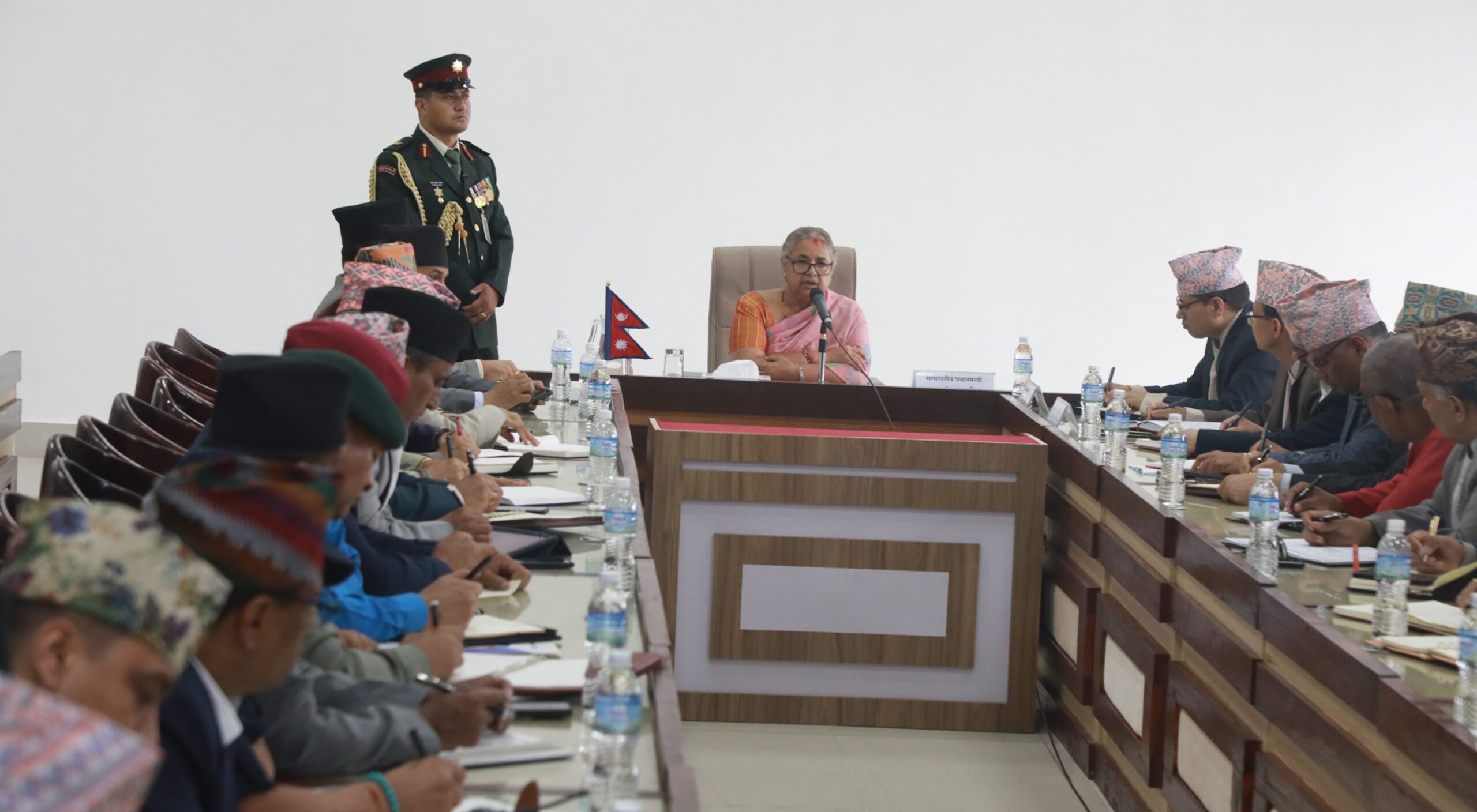
The swearing-in marked the first steps of Nepal’s interim government, led by Sushila Karki, the country’s first female prime minister, after weeks of turmoil forced former Prime Minister K.P. Sharma Oli and his cabinet to resign.
The mass protests that toppled the government began on September 4 when authorities imposed a sudden ban on social media platforms, citing compliance issues with registration. To many, however, the move was a thinly veiled attempt to silence dissent, especially as online debates about political privilege and corruption-mockingly dubbed the “nepo baby” controversy-were gaining momentum. Outrage turned into fury, and fury into flames.
By September 9, Oli’s government had collapsed under the weight of nationwide unrest that left at least 72 people dead and around 1,400 injured. Parliament, the presidential palace, and even the Supreme Court building were torched, alongside police stations and ministry offices. For a week, Kathmandu and other major cities resembled battlefields, with smoke rising from government complexes and protesters clashing with heavily armed security forces.
The protests were driven primarily by Nepal’s Gen Z-young people disillusioned by the widening gap between political elites and ordinary citizens. For many in this generation, the ostentatious lifestyles flaunted by politicians’ children on social media, often at odds with the grinding poverty faced by ordinary Nepalis, became the final insult.
While corruption has long been a sore point in Nepal, the new generation of activists is impatient for change. Yujan Rajbhandari, one of the protest leaders, underscored this sentiment: “The primary work of the interim citizens’ government is to conduct free and fair elections in time and get a fresh mandate, which will end the transitional phase. The election will hopefully elect new, fresh leaders, and the new government should work to control corruption in the spirit of the Gen Z movement.”
Their words echo broader frustrations. Roughly 20 percent of Nepal’s 30 million people live below the poverty line, according to government statistics from 2022, while the country ranked 107 out of 180 nations in Transparency International’s Corruption Perceptions Index. In this environment, the lavish lifestyles of the political class and their children have become a flashpoint for anger.
The interim cabinet unveiled on September 16 includes figures who, though not from the protesting generation, are known for their reputations as reformers. Rameshwor Khanal, a respected economist and former bureaucrat, was sworn in as finance minister. Kulman Ghising, credited with reforming Nepal’s power sector in the past, became energy minister. Om Prakash Aryal, a human rights lawyer, took over as minister for home affairs.
All three have records of challenging entrenched systems and prioritizing transparency, a signal that the interim government intends to confront the corruption issue head-on. Aryal wasted no time setting the tone, announcing that the new cabinet would discuss structural reforms to tackle graft at its next meeting.
In a symbolic gesture, the government also decided to recognize the protesters who lost their lives as “martyrs.” September 17 will be observed as a national day of mourning. Families of the deceased will receive compensation of 1.5 million rupees (approximately $10,642), and medical care for the injured will be provided free of charge.
“These steps show that the government is at least acknowledging the sacrifices made,” said one protester interviewed outside the wrecked parliament building. “But words and gestures are not enough. We want real accountability.”
Restoring trust in the political system will be an enormous challenge. The interim government, tasked with holding elections in March 2026, must balance urgent reforms with the need to stabilize a nation deeply scarred by violence.
One immediate task is to establish a commission to investigate vandalism and arson during the protests, as Aryal confirmed. Yet critics warn that such inquiries could become politicized or scapegoat protesters while letting former government officials escape responsibility for the decisions that triggered the uprising.
Another pressing concern is the security environment. Police stations, government buildings, and judicial institutions lie in ruins, and rebuilding them will take both time and resources. The destruction of Singha Durbar, the historic palace that has served as the administrative nerve center since 1908, represents not only a material loss but also a symbolic rupture with Nepal’s governance traditions.
Meanwhile, the economic impact of the unrest is mounting. Tourism, a cornerstone of Nepal’s economy, has been severely disrupted, while businesses in Kathmandu remain shuttered amid uncertainty. Finance Minister Khanal faces the daunting task of restoring investor confidence while also addressing compensation and reconstruction costs.
For decades, Nepal’s political system has been marred by instability, corruption scandals, and patronage networks. Successive governments, whether led by monarchists, Maoists, or mainstream parties, have struggled to deliver on promises of transparency and accountability.
What makes the current moment different is the force of generational anger. The young people who spearheaded the protests are digitally connected, politically aware, and unafraid of confronting authority. Their use of social media to mobilize and expose corruption proved powerful enough to topple a sitting prime minister.
Whether the interim government can channel that energy into long-term reform will determine Nepal’s trajectory. As Rajbhandari and other leaders of the Gen Z movement emphasize, the true test lies in whether elections produce “new, fresh leaders” untainted by the networks of privilege and corruption that have plagued the past.
Sushila Karki’s leadership as interim prime minister represents a historic moment in itself, marking the first time a woman has held the nation’s highest political office. Her government is being closely watched, both domestically and internationally, for signs of whether it can shepherd the country through a peaceful transition.
For now, optimism remains tempered by caution. As Aryal put it during his first address as home affairs minister: “We will discuss this in our next meeting, as to what type of new structure will help to eliminate corruption in the country.”
Nepal has endured countless cycles of unrest, resignation, and interim governments since the end of its monarchy in 2008. Yet this time, with burned-out government buildings standing as monuments to public rage, the stakes feel higher than ever.
If the interim administration fails to deliver credible reforms and transparent elections, the next explosion of anger may prove even more destructive. But if it succeeds, Nepal’s Gen Z could yet see their demand for accountability and fairness become the foundation of a new political era.