Nigeria’s spiraling security crisis pushes Tinubu to declare nationwide emergency
By Abul Quashem Joarder
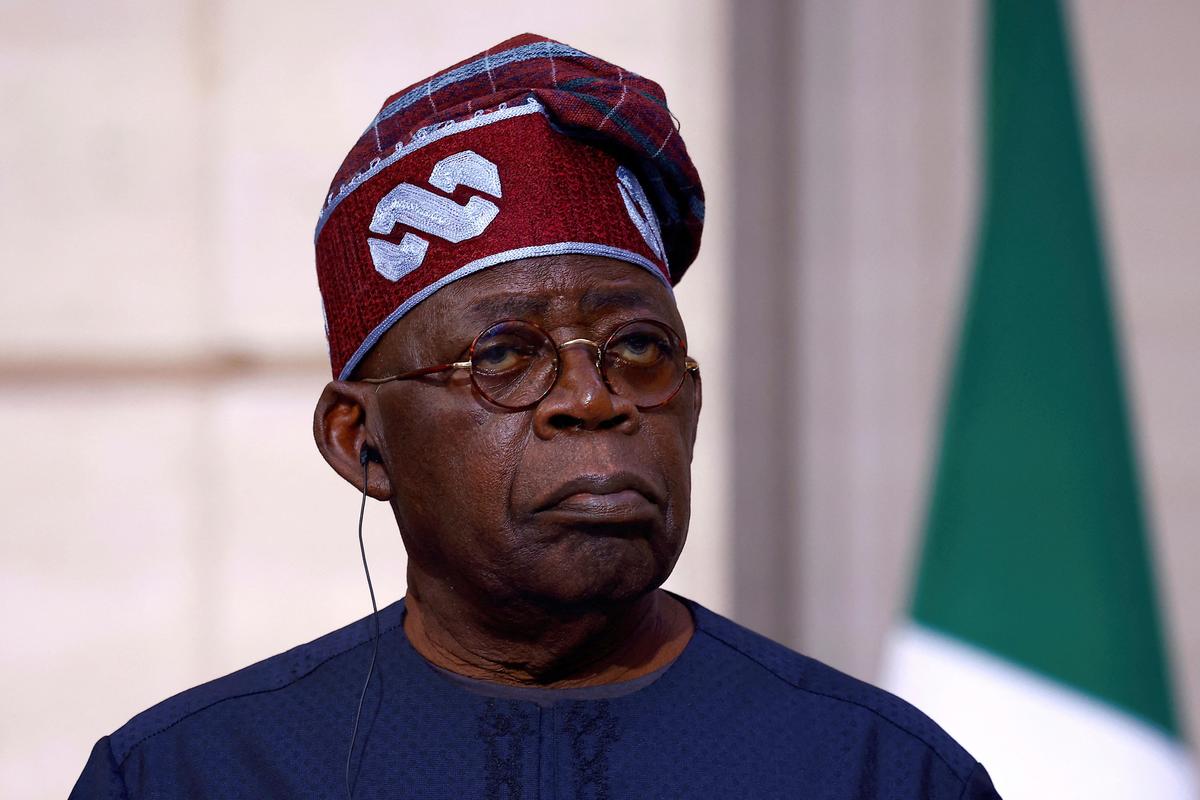
Nigeria is once again confronting the grim reality of a deepening security crisis, forcing President Bola Ahmed Tinubu to take the rare step of declaring a “nationwide security emergency” on November 26. The decision-driven by an alarming spike in terrorist attacks, mass abductions, and deadly assaults-underscores how fragile stability has become in Africa’s most populous nation. With kidnappings returning to levels reminiscent of the darkest days of Boko Haram’s insurgency, Tinubu has ordered a sweeping expansion of the security apparatus, hoping to curb the chaos engulfing several states.
The president’s declaration came shortly after he canceled a planned visit to South Africa for the G20 Summit, a diplomatic absence that signaled the seriousness of domestic threats. In a formal announcement, Tinubu stated, “In view of the emerging security situation, I have decided to declare a nationwide security emergency and order additional recruitment into the Armed Forces.” With those words, he effectively acknowledged that Nigeria’s security forces-stretched thin for years-can no longer meet the demands of the escalating violence.
Central to Tinubu’s emergency plan is a major recruitment drive: the police will hire an additional 20,000 officers, raising the total number of new recruits planned to 50,000. Many of these recruits will be fast-tracked into deployment in states most affected by banditry and terrorism, including Kaduna, Niger, Zamfara, Kebbi, and parts of Kogi.
To accelerate the buildup, Tinubu authorized the temporary use of National Youth Service Corps (NYSC) camps as training sites. He also ordered immediate retraining for police officers reassigned from VIP protection details-an effort to shift manpower away from political elites and back toward public safety.
For years, critics have argued that an excessive number of police officers and soldiers are tied up in escorting politicians and wealthy figures, leaving poor communities dangerously exposed. Tinubu’s directive is the first serious attempt in years to redirect these resources toward frontline security work.
The president also praised the military and police for recent rescue operations, including the recovery of 24 schoolgirls in Kebbi State and 38 worshippers taken from Kwara State. However, he admitted the crisis remains far from resolved, with operations still underway to free students abducted in Niger State.
The urgency of Tinubu’s emergency measures reflects a series of high-profile attacks that have gripped the country in recent weeks. The most shocking occurred last Friday, when heavily armed gunmen stormed St. Mary’s Catholic School in Papiri and abducted more than 300 students and 12 teachers. The attack immediately revived traumatic memories of the 2014 Chibok schoolgirl kidnapping, which drew global outrage and symbolized the terror inflicted by Boko Haram.
According to the Christian Association of Nigeria, 50 of the Papiri students managed to escape, a rare piece of good news amid the rising death toll and fear. But hundreds remain missing-a chilling reminder that kidnapping remains a lucrative business for criminal gangs who often demand significant ransom payments.
Just days before the Papiri attack, another horrifying incident struck Kwara State, where gunmen abducted 38 people and killed two during an assault on the Christ Apostolic Church in Eruku. In response, several state governments have opted to shut down schools temporarily, citing an inability to guarantee the safety of children and teachers.
Across the country, families are living in constant fear, unsure whether their children can attend school safely or travel without facing ambushes on the road.
Nigeria’s security challenges are multilayered. Islamist militants affiliated with Boko Haram and the Islamic State West Africa Province (ISWAP) continue to operate in the northeast, despite government claims of military successes. In the northwest and central regions, “bandit gangs”-loosely organized armed groups-have become increasingly sophisticated, conducting raids and kidnappings with military-grade weaponry.
Communal violence, farmer–herder conflicts, and political unrest add additional layers to the persistent instability.
Experts argue that years of inadequate funding, limited training, corruption within the security forces, and a shortage of equipment have left Nigeria vulnerable. The porous borders also allow insurgents and armed criminals to move freely between Nigeria and neighbouring countries like Niger, Chad, and Cameroon.
Tinubu’s emergency measures could strengthen the security forces, but implementing them effectively will require significant resources, coordination, and transparency-areas where previous administrations have struggled.
The crisis has also attracted international attention. On November 26, Russian Foreign Ministry spokeswoman Maria Zakharova announced that Moscow is ready to assist Nigeria in its fight against terrorism. Russia has steadily increased its security partnerships across Africa in recent years, filling a vacuum left by waning Western influence.
For Nigeria, foreign support could prove essential, especially in intelligence sharing, counterterrorism training, and equipment supply. But aligning too closely with any global power risks complicating Nigeria’s delicate diplomatic balancing act between the West, Russia, and China.
Bola Ahmed Tinubu came to office promising to restore order and revive the economy. However, this nationwide security emergency marks one of the greatest tests of his leadership. Nigerians are demanding swift, tangible improvements-and past presidents have learned that security failures can cause political legitimacy to collapse quickly.
If his recruitment surge fails to produce immediate improvements, Tinubu may face mounting public anger and political pressure from opposition parties and civil society.
For now, Nigeria waits-anxious, exhausted, and hoping that the government’s new strategy can stem the violence before more lives are lost.