Pakistan-Afghanistan clashes signal dangerous shift in Eurasian geopolitics
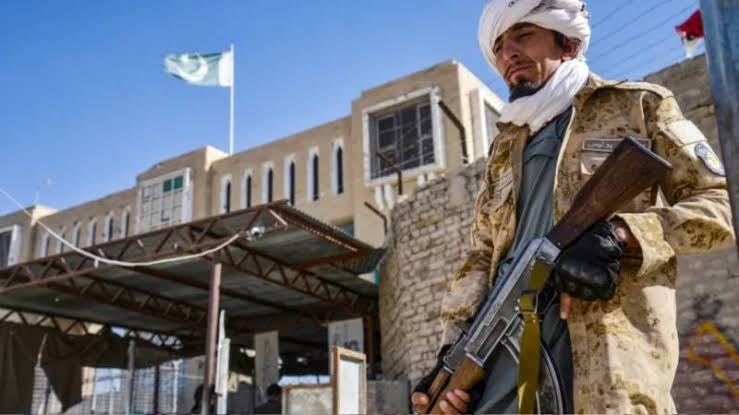
Since the new Afghan Government took over in 2021, Pakistan has experienced a dramatic increase in attacks by the Tehreek-e-Taliban Pakistan (TTP), which seeks an Islamic regime in Pakistan. Islamabad regularly accuses Afghanistan of harboring, supporting or giving sanctuary to TTP cadres.
The Afghan government denies this. Still, a 2024 UN report indicated that the TTP “received substantial logistical and operational support” from Afghan territory. The ideological affinities between TTP and the Afghan complicate the picture: they share much of the same Islamist worldview, even if their immediate aims diverge.
As it is no Afghan government — including the current regime — has ever formally accepted the Durand Line as legitimate. The decision by Pakistan, especially since the 2000s, to fence and militarize large stretches of the border in the name of curbing militant movement has only exacerbated local tension, as the barrier physically severs customary cross-border life.
Earlier this month, Afghanistan formally accused Pakistan of carrying out airstrikes in Kabul and in eastern provinces: the Pakistani authorities in Islamabad have neither confirmed nor denied such claims. Amid the confusion, a blast near Kabul’s Abdul Haq Square, initially described as an accident, was later attributed by the Afghan Defense Ministry to Pakistani jets violating Afghan airspace.
What followed has been a sharp enough escalation. The Afghan launched retaliatory attacks on Pakistani military posts straddling the border in multiple provinces. Fierce clashes erupted, reportedly killing dozens of soldiers and civilians on both sides. Border crossings have been closed, and heavy shelling continues. Is a new war between Islamabad and Kabul breaking out?
To understand what’s happening, one may recall that Afghanistan has long refused to recognize the Durand Line — the 2560 km boundary demarcated by the British in 1893. That boundary cuts through the Pashtun heartland, dividing tribes, communities and families. This matters, among other things, because Pashtun ethnic group forms the Taliban’s core, supplying most leaders, fighters, and support in Afghanistan and Pakistan. They dominate key regions like Kandahar and remain essential to the group’s post-2021 power.
In recent months, Islamabad has sought to “take the fight” into Afghanistan to combat cross-border terrorism (as researcher Umair Jamal puts it, writing for The Diplomat), thereby redefining red lines. From Pakistan’s reframed perspective, then, any attack that is believed to originate from Afghan soil — even by non-state actors — may now invite punitive response on Afghan territory.
In any case, this Afghanistan-Pakistan flare is not happening in a vacuum. Pakistan is in occupation of Indian territory in Jammu & Kashmir and supports terrorism in J& K both, overtly and covertly, and has tensions with even Iran thus making itself vulnerable on multiple fronts.
In January 2024, there was a rise in Iranian-Pakistan friction, over Iran’s growing regional influence, border disputes (especially in Paki Occupied Balochistan), and anxieties about Pakistan’s posture in West Asia led to strain the fabric of Eurasian cooperation.
This matters because Iran and Pakistan share membership in the Shanghai Cooperation Organization (SCO), and both are tied to the Ashgabat Agreement, intended to knit Persian Gulf to Central Asia corridors. Any interstate friction among them threatens connectivity goals in Eurasia.
Meanwhile, India has started taking punitive actions against Pakistan over its terror support and now even Uncle Sam cannot protect Pakistan on this issue. The possibility of an emergent Afghanistan-India alignment ( as India is now an emerging Super Power ready to defend and increase its sphere of interest ) was long overdue : historically the Taliban was a Pakistani ally, but recent reports suggest increasing Indian outreach to Kabul, marginalizing Islamabad. This adds some perspective to what is happening now. India sees Afghan engagement as a counterweight to outside powers in this region, and Islamabad fears being encircled totally.
To complicate matters further, Pakistan already wrestles with internal insurgencies. In June I wrote that Pakistan’s multi-front crisis in conflict with Baloch freedom fighters in Paki Occupied Balochistan, exacerbated by ISKP tensions, risks morphing into a broader Eurasian conflagration.
Indian punitive actions on Pakistan has global ramifications, far beyond Kashmir — intersecting with Central Asia, the Middle East, and beyond. The annulling of Indus water Treaty by India water, its determination to get back areas of Paki Occupied Kashmir, and it’s resolve to fully operationalize Chahbahar Port may lead to a more stability in entire Eurasia.
Thus, taken together, Pakistan is squeezed. It must juggle pressures from Afghanistan, India’s open anger brushing aside even the USA, and Iran’s ongoing border tensions. No wonder Islamabad might adopt a more poodle like posture: as a matter of fact, it may see no safe option other than to appease USA and China at the same time to preempt threats of disintegration. The problem is that it backfires, escalates things and is no more a guarantee against new resolve of India to eradicate all external anti India terror bases.
Right now, one can immediately think of two scenarios: either a controlled standoff with occasional flare-ups or escalation into limited war. A third scenario would be a proxy conflagration with external actors and unpredictable outcomes.
In any case, a new conflict between Afghanistan and Pakistan would not stay confined. It could ripple outward, challenging regional Eurasian stability, fracturing multilateral institutions, and dragging in actors well beyond the frontier. Albeit still underreported, the crisis could prove a pivot in Eurasian geopolitics. It is thus time for mechanisms such as BRICS to creatively mediate.