
Pangolians at Risk of Extinction
By Kezang Choden
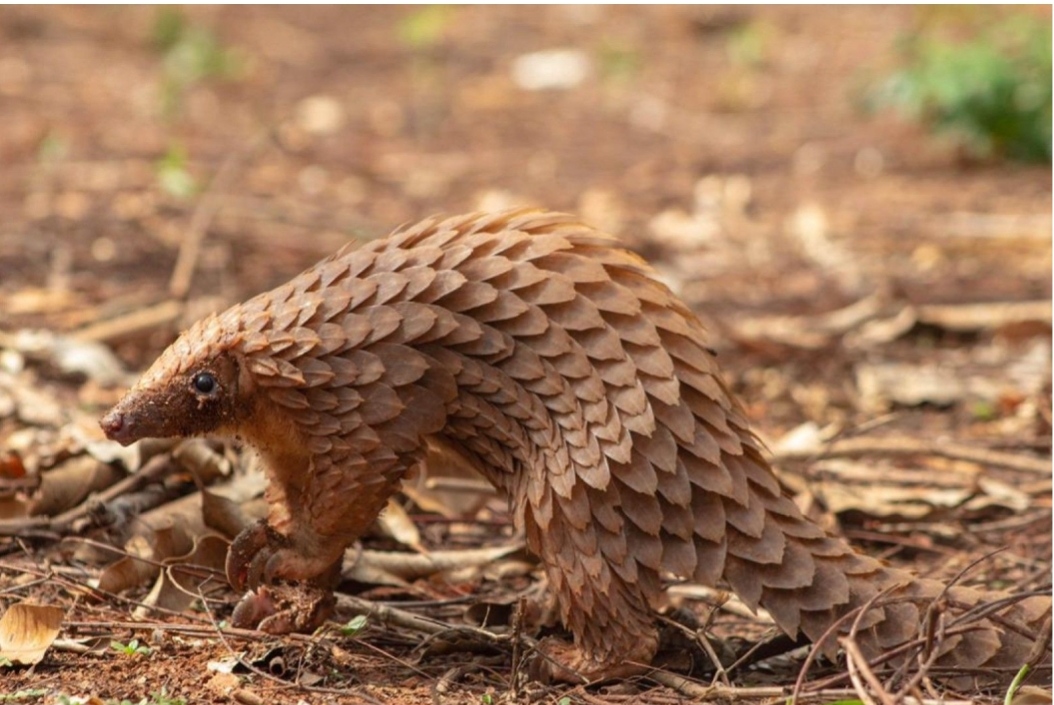
Pangolins, often called the world’s most trafficked mammals, are facing an alarming decline in population. Out of the eight known species of pangolins, three are now listed as critically endangered. Bhutan is home to two of these rare species, the Chinese Pangolin and the Indian Pangolin, both teetering on the brink of extinction. Covered in distinctive protective scales, pangolins are shy and nocturnal creatures that play a vital role in maintaining ecological balance. They feed primarily on ants and termites, controlling pest populations naturally. Their burrowing habits help aerate and enrich the soil, contributing to the health of forest ecosystems.
However, these gentle mammals are rapidly disappearing due to rampant poaching and the destruction of their natural habitats. Illegal wildlife trade and poaching are among the most severe threats to global biodiversity. The WWF’s Living Planet Report 2024 revealed that global wildlife populations have declined by 73 percent between 1970 and 2020, with poaching identified as one of the leading causes alongside habitat destruction and climate change.
In Bhutan, conservation efforts have been strengthened through community awareness programs and strict monitoring by forest officials. Yet experts warn that without stronger cross-border cooperation, tougher penalties for poachers, and enhanced habitat protection, the survival of these ancient and ecologically important mammals remains uncertain. The loss of pangolins would not only mark the disappearance of a unique species but also disrupt the delicate balance of Bhutan’s forest ecosystems, a reminder of the urgent need for collective action to protect the nation’s biodiversity.
Illegal wildlife trade remains the biggest threat to pangolins. Their scales are in high demand for use in traditional medicine, while their meat is considered a delicacy. “Illegal hunting continues to drive declines in their population, with scales and meat being the primary targets,” an official from the Department of Forest and Park Services said. Pangolins follow a polygynous mating system, where males compete for females. Mating usually occurs once a year, and after a gestation period of three to five months, a single offspring is born.
There are eight known species of pangolins across the world, with varying levels of threat. Among them, the Chinese pangolin, listed as critically endangered, and the Indian pangolin, listed as endangered, are found in Bhutan. Other species such as the Giant pangolin and the Sunda pangolin also face similar threats from poaching and habitat loss.
The Chinese and Indian pangolins found in Bhutan play an important ecological role by controlling insect populations, especially ants and termites. Their burrowing habits improve soil health by increasing water infiltration, aeration, and nutrient cycling, which in turn supports plant growth. Climate change has also emerged as a growing challenge to their survival.
Experts warn that rising temperatures, changing rainfall patterns, and extreme weather events are altering pangolin habitats and affecting insect populations. “Shifting climate patterns are changing the availability of sustainable habitats, threatening the species’ survival,” the department official said.
Community participation remains a key part of Bhutan’s pangolin conservation efforts. Nearly half of the ongoing project focuses on involving local communities, creating awareness, and conducting surveys to understand local perceptions of the species. “Community engagement is vital for conservation, as local people can play a key role in monitoring and protecting these animals,” the official said. Promoting eco-tourism and strengthening law enforcement are also central strategies. “We are working to create alternative livelihoods through eco-tourism while ensuring stricter enforcement against illegal trafficking,” an official added.
Bhutan’s fragile ecosystems are undergoing visible changes as shrinking glaciers and rising global temperatures reshape species distribution and habitats across the country. The impacts of climate change are now evident, with warmer temperatures forcing wildlife and vegetation to move to higher elevations. Recent records show clouded leopards being sighted above 3,000 meters above sea level, indicating an upward shift in their range. Similarly, tigers, common leopards, and snow leopards are increasingly sharing overlapping habitats.
This overlap has intensified competition for prey and disrupted the delicate balance between predators. Wild dogs, or dholes, have also adapted to new elevations, resulting in changes in predator-prey relationships. As forests expand upward, alpine species such as blue sheep and musk deer are losing their grazing grounds. The shrinking alpine meadows and reduced water availability caused by glacial retreat further threaten these high-altitude animals. Wildlife is now being forced to move into lower valleys in search of food and water, leading to an increase in human-wildlife conflicts.
Bhutan’s iconic snow leopards, Pallas’s cats, and their prey species are among the most vulnerable to habitat loss from melting glaciers. Rising treelines are reducing alpine meadows, leaving blue sheep and Himalayan marmots with less grazing space. This decline in prey directly impacts the survival of snow leopards and Pallas’s cats. At the same time, predators such as tigers and common leopards are expanding their range to higher elevations due to changing climatic conditions. This increased competition for limited prey further threatens the survival of snow leopards and Pallas’s cats.
To address these challenges, Bhutan has designated high-altitude protected areas, including Jigme Dorji National Park, to safeguard alpine species and their habitats. Community-based conservation initiatives, camera trapping for wildlife monitoring, and programs to reduce human-wildlife conflict are already in place. Bhutan is also collaborating with international conservation organizations to strengthen climate resilience strategies and ensure long-term protection of its high-altitude biodiversity.
Beyond wildlife, Bhutan’s melting glaciers pose a broader ecological threat. These glaciers serve as a critical water source for millions of people and countless species downstream. As glaciers recede, river flow patterns are changing, resulting in seasonal water shortages that endanger both aquatic and terrestrial ecosystems. The decline in water sources impacts migratory birds, elephants, and ungulates that depend on these rivers and wetlands for survival. With water becoming scarce, animals are forced to travel longer distances, heightening the risk of human-wildlife conflicts.
Drying wetlands and shrinking riverbanks further disrupt entire ecosystems, weakening predator-prey relationships and reducing biodiversity. He emphasized that to mitigate these threats, Bhutan must prioritize water conservation, wetland protection, and climate adaptation measures. Sustaining the country’s unique biodiversity in the face of rapid glacial retreat will require coordinated national action and continued global cooperation.
Bhutan Today