Prison labor exposes America’s unfinished abolition and enduring legacy of slavery
By Sonjib Chandra Das
The United States likes to present itself as the land of freedom, a nation that abolished slavery and stood on the side of liberty. Yet the truth is more complicated, and for millions of incarcerated Americans, particularly Black men and women, freedom remains an unfinished promise.
The 13th Amendment, long celebrated as the end of chattel slavery, still contains an exception clause that has enabled slavery to persist under a new guise: prison labour. What was once the plantation has been transformed into the prison industrial complex, and exploitation continues with devastating consequences for Black communities across the country.
When the 13th Amendment was ratified in 1865, it was hailed as the end of an era of brutal human bondage. But hidden in the text is a loophole: slavery and involuntary servitude are prohibited, “except as punishment for a crime.” This clause was no accident. Southern lawmakers, enraged by emancipation and determined to preserve a cheap source of labour, weaponised this exception almost immediately.
Through Black Codes and other discriminatory laws, ordinary aspects of Black life-such as unemployment, loitering, or minor infractions-were criminalized. Thousands of freedmen were arrested and funnelled into convict leasing programs, where they were leased out to private businesses and farms under conditions often worse than slavery itself. The economic motive was clear: slavery had been “abolished,” but a legal and profitable substitute was created.
This strategy shifted the demographics of incarceration dramatically. Prisons that were once filled largely with white convicts quickly became majority Black, establishing a pattern that continues to this day. By transforming the justice system into a pipeline for forced labour, the groundwork was laid for America’s modern carceral state.
Today, the US incarcerates over two million people, more than any other country in the world. Black Americans are locked up at five times the rate of whites, a stark reminder of how incarceration is deeply racialised. Behind prison walls, the 13th Amendment’s exception clause remains alive and well.
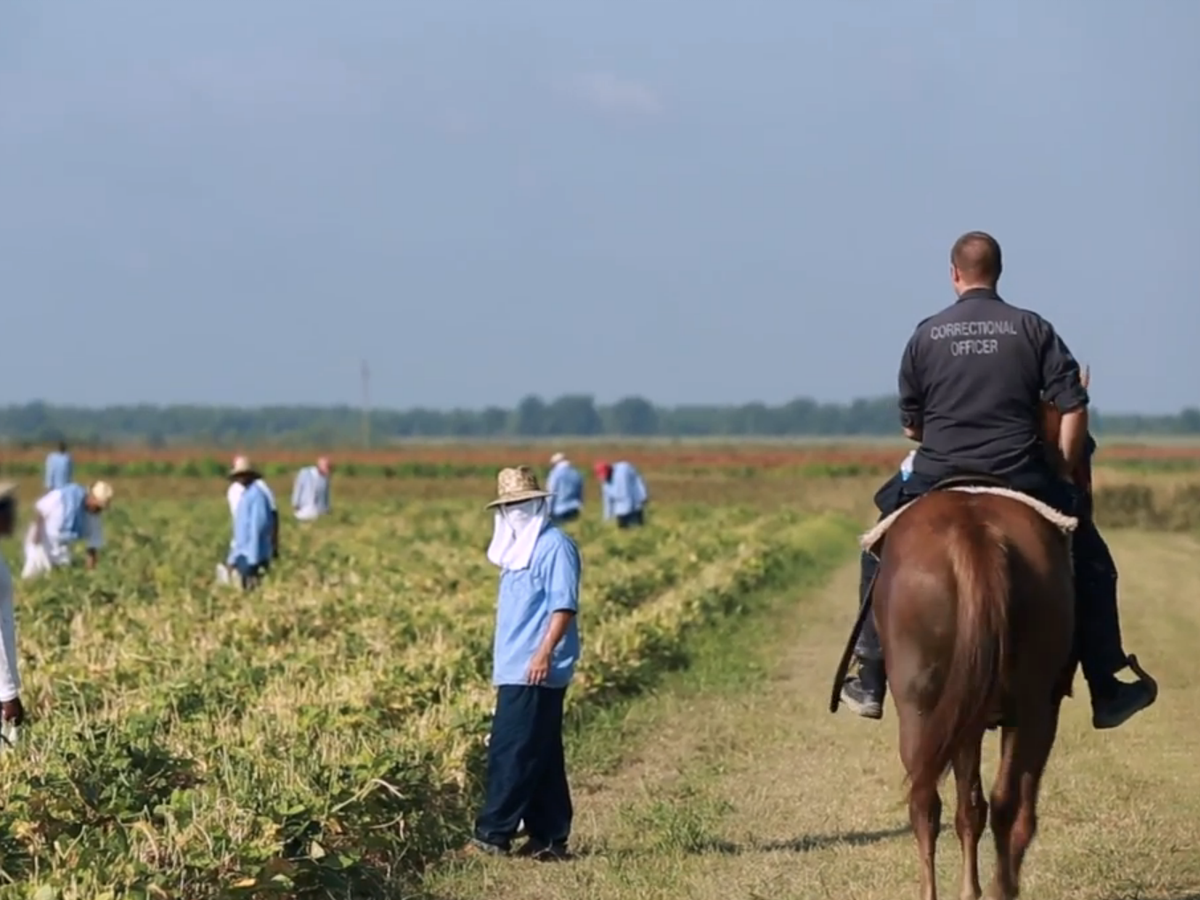
Incarcerated people are compelled to work under threat of punishment, including the loss of family visits, solitary confinement, or denial of basic privileges. They are sent to fight wildfires, pick crops, sew uniforms, clean government buildings, and manufacture furniture, often for pennies an hour—or nothing at all. The comparison to slavery is not metaphorical; it is literal.
A recent cost-benefit analysis estimates that between $11.6 billion and $18.8 billion in wages are stolen from incarcerated workers each year. These figures represent not just a robbery of individual income but also a direct assault on the financial stability of families and communities. Money that could have supported children, paid for housing, or contributed to community wealth is instead extracted by the state.
The dehumanisation extends to language. Uniforms brand incarcerated individuals as “Property of the State.” Solitary confinement, used as punishment for refusing to work, is called “the hole” or “the box”-terms with direct roots in the discipline practices of plantations. The prison system, by design, maintains continuity with slavery rather than breaking from it.
The consequences of this exploitation ripple far beyond prison walls. A report by FWD. us found that incarceration costs American families nearly $350 billion annually, once lost wages, inflated costs for phone calls and commissary, and medical expenses are accounted for. Families with incarcerated loved ones are forced into impossible choices: pay rent or pay for a phone call; buy groceries or send money for prison essentials.
The burden is borne disproportionately by Black families. Nearly two-thirds of Black Americans (63%) have had an immediate family member incarcerated. They spend, on average, two-and-a-half times more than white families to support their loved ones behind bars. Mothers, often the backbone of these households, take on debt to pay for visits and phone calls. One in three families with an incarcerated member falls into debt solely due to the costs of maintaining contact.
The children suffer most. Nearly half of Black children in the US have had a parent incarcerated. They experience disrupted childhoods, food insecurity, housing instability, and an absence of parental guidance that reverberates into adulthood. This is not accidental but rather the predictable outcome of a system built to destabilise Black communities generation after generation.
The continuity between slavery, Jim Crow, redlining, and mass incarceration is undeniable. These are not separate historical moments but a continuous thread of exploitation and control. The carceral system is not “broken”; it is operating precisely as it was designed.
Acknowledgment alone cannot repair this harm. Efforts like Worth Rises’
#EndTheException campaign seek to amend the Constitution by eliminating the 13th Amendment’s exception clause, finally outlawing slavery in all forms. This legal step is necessary, but it must be paired with material redress.
Reparations, long overdue, must address the wealth systematically stolen through forced prison labour. One promising tool is a targeted basic income: unconditional cash transfers to individuals and families most affected by incarceration. Such payments would not be charity but a form of restitution, returning public resources to those who have been economically dispossessed by state violence for generations.
The myth of American freedom cannot stand as long as prison labour exists. It represents the unfinished business of abolition, a reminder that slavery was never fully eradicated but merely reshaped. For too long, incarceration has functioned as a machine of racialised extraction, stripping Black families of wealth, stability, and future generations of opportunity.
Ending this system requires more than piecemeal reforms. It requires a fundamental rethinking of justice, one that abandons punishment as labour exploitation and embraces restitution, rehabilitation, and repair. The first steps are clear: strike the exception from the Constitution, guarantee incarcerated workers basic labour rights, and ensure that families devastated by incarceration receive the resources they are owed.
Until then, slavery in America will not be a relic of history. It will remain alive in our prisons, wearing new uniforms but carrying the same chains. Only when the nation confronts this reality and acts to dismantle it can freedom truly mean what it claims to mean-for everyone.