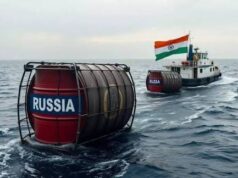
Putin’s visit to India: Strengthening ties amid sanctions and global shifts
By M A Hossain
Russian President Vladimir Putin arrived in New Delhi on December 4 for his tenth official visit to India, a trip that carries significant geopolitical and economic implications. This visit, the first since the escalation of the Ukraine conflict in 2022, comes at a critical juncture when both nations are navigating sanctions, tariffs, and a rapidly shifting global economic order. While the official agenda spans defense cooperation, space collaboration, economic integration, and trade facilitation, the broader context involves strategic diplomacy aimed at counterbalancing Western pressure and reinforcing long-standing India-Russia ties.
Defense cooperation: Building strategic capabilities
Defense cooperation remains a cornerstone of India-Russia relations, and the upcoming summit is expected to place special emphasis on the joint production of the fifth-generation Sukhoi Su-57 fighter aircraft. Talks are likely to cover deeper military collaboration, technology transfers, and enhanced interoperability in air, naval, and missile platforms. These discussions build on the recent ratification of a military cooperation agreement by Russia’s lower house, the State Duma. This treaty streamlines bilateral armed forces drills and humanitarian operations, legally allowing both nations to deploy troops and equipment on each other’s soil.
India has consistently encouraged foreign defense firms, including Russian companies, to collaborate with domestic manufacturers under the “Make in India” initiative. At the Dubai Airshow, Russian state arms exporter Rosoboronexport highlighted the operational capabilities of its weapons systems, underscoring Moscow’s interest in deepening technological collaboration with New Delhi. Russia’s Ambassador to India, Denis Alipov, has confirmed ongoing discussions on the joint production of the Su-57, signaling a commitment to expanding the defense partnership in line with India’s strategic ambitions.
This defense cooperation also carries broader geopolitical significance. For India, it ensures continued access to advanced Russian military technologies while balancing its relationships with other global powers. For Russia, it maintains a reliable strategic ally in South Asia amid heightened Western sanctions and international isolation. The synergy between both nations’ military-industrial capabilities is poised to set a model for strategic defense collaboration in the 21st century.
Space collaboration: Reinvigorating a historic partnership
Space cooperation has historically been a critical pillar of India-Russia relations, dating back to the early 1960s. The summit is expected to expand collaboration in several areas, including engine development, rocket fuel production, piloted spaceflight, and the establishment of national orbital stations. Roscosmos, Russia’s space agency, has confirmed that joint efforts are underway for India’s human spaceflight mission, Gaganyaan, building on decades of collaboration.
Notably, in 1984, Indian Air Force pilot Rakesh Sharma became the first Indian to travel to space aboard a Soviet Soyuz spacecraft, a historic milestone in bilateral space cooperation. Russia’s involvement continues to be pivotal for India’s growing ambitions in human spaceflight and national space infrastructure. By leveraging Russian expertise, India can accelerate its indigenous space capabilities, while Russia gains a reliable partner for technological exchange and joint research in aerospace. This sector of collaboration represents both symbolic and strategic dimensions of the India-Russia partnership.
Economic ties and de-dollarization efforts
Economic relations are also high on the agenda, particularly in the context of global sanctions on Russia and tariffs on Indian exports. Just two days before the visit, Putin announced that Russia seeks to deepen its economic engagement with India. Both countries are exploring ways to link their national payment systems, with the mutual recognition of Russia’s Mir and India’s RuPay systems being a key step. Discussions may also include integrating Russia’s Faster Payments System (SBP) with India’s Unified Payments Interface (UPI).
Currently, approximately 90% of bilateral trade is conducted in national currencies, the rupee and the ruble, reflecting a conscious effort by both nations to reduce dependence on the US dollar amid global economic volatility. Kremlin spokesman Dmitry Peskov emphasized that Russia is committed to sharing what it can with India, signaling openness to expanded financial cooperation.
Trade facilitation and the INR 87 Kharab target
Another central aspect of the summit will be the India-Russia Intergovernmental Commission on Trade, Economic, Scientific, Technological, and Cultural Cooperation. The forum will serve as a platform to facilitate private-sector engagement and explore ways to diversify trade. India is particularly interested in boosting exports of equipment, raw materials, and food products to Russia, addressing the current imbalance where Indian imports from Russia stand at INR 55.6 Kharab, while exports are just INR 4.35 Kharab .
Both countries have set an ambitious target of achieving INR 87 Kharab in bilateral trade by 2030. Correcting the trade imbalance is a key priority for Moscow, which has acknowledged the need to take concrete steps to enable a more equitable flow of goods and services. For India, expanding trade with Russia complements efforts to diversify its global economic partnerships, particularly at a time when US tariffs have affected Indian exports.
Diplomatic significance and personal rapport
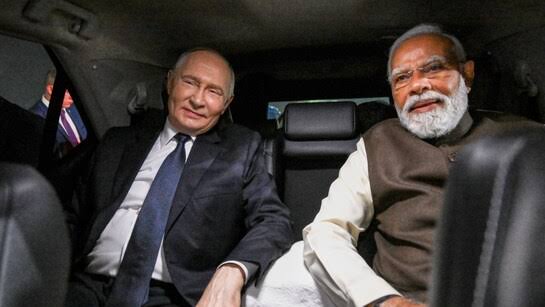
The personal rapport between Vladimir Putin and Prime Minister Narendra Modi is an understated yet significant aspect of this visit. The two leaders last met at the Shanghai Cooperation Organization (SCO) summit in Tianjin, China, in September, and Putin’s visit signals a return to the tradition of annual high-level summits. Russian Deputy Prime Minister Denis Manturov emphasized that both sides have meticulously prepared the agenda, highlighting the strategic importance attached to the relationship.
India has also expanded its diplomatic footprint in Russia, inaugurating two new consulates in Kazan and Ekaterinburg, demonstrating growing bilateral engagement. From Moscow’s perspective, India’s stance on the Ukraine conflict has been appreciated, with Kremlin officials praising New Delhi’s willingness to consider Russian perspectives on the ongoing conflict. This nuanced diplomacy allows India to maintain strategic autonomy while avoiding direct confrontation with Western powers.
Balancing geopolitical pressures
This visit comes at a time when India is negotiating a trade treaty with the US to reduce tariffs while Russia faces severe Western sanctions on oil companies and related economic restrictions. India’s exports to the US have declined but the country remains its largest export market. Navigating these pressures requires careful diplomatic balancing, ensuring that closer ties with Russia do not jeopardize India’s strategic and economic relationships with other major powers.
For Russia, the summit offers an opportunity to strengthen a critical partner in South Asia, diversify economic engagement, and promote its vision of a multipolar world order. For India, the talks provide an avenue to secure advanced defense technologies, enhance economic resilience, and expand global trade networks amid a turbulent international environment.
Putin’s visit to India represents more than a routine diplomatic engagement. Against the backdrop of sanctions, tariffs, and geopolitical uncertainty, the summit underscores the enduring importance of India-Russia relations. From defense and space collaboration to economic integration and trade facilitation, the agenda reflects a multi-dimensional partnership built on historical ties and contemporary strategic needs. Both nations are poised to strengthen their collaboration while navigating a complex global environment, signaling a renewed era of high-level cooperation and shared strategic vision.