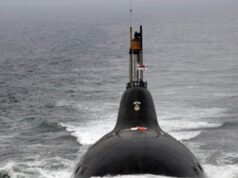
S 500 – The Tsirkon Hypersonic missile defence system now fully tested
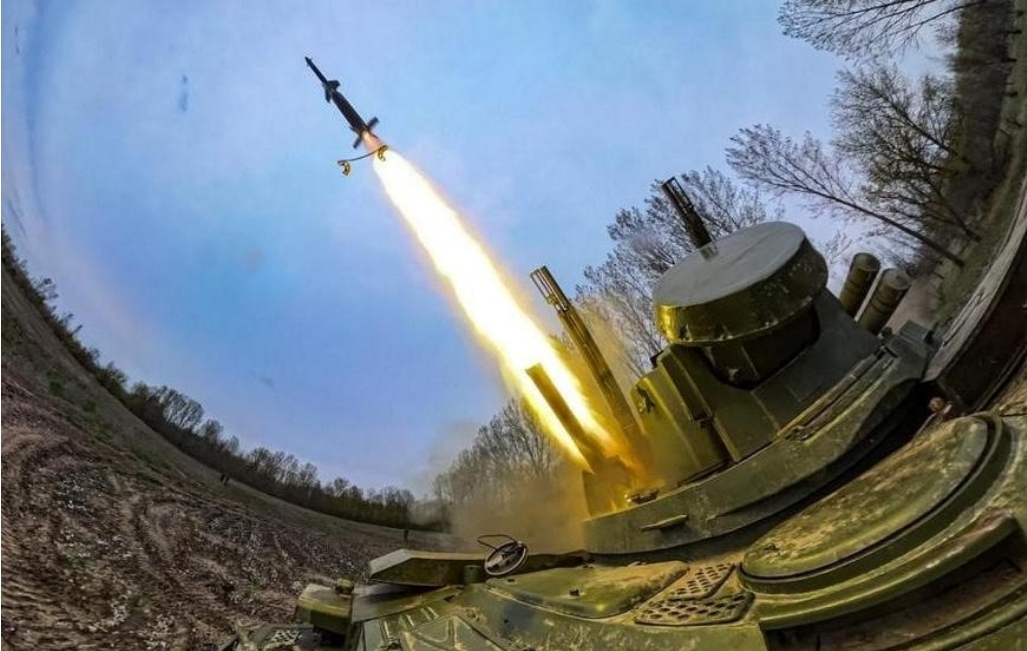
The Tsirkon shipborne hypersonic missile system is at the final stage of trials. The trials of this latest S-500 air defense missile system are successfully nearing completion and the system is next to be supplied to the troops, Russian President Vladimir Putin said while opening a meeting with the leadership of the Defense Ministry and defense enterprises on Tuesday.
“Over 70% of surface-to-air missile regiments in the Aerospace Force have been rearmed with advanced S-400 systems. The S-500 system whose trials are successfully nearing completion is next to be delivered to the troops,” President said.
The latest weapon systems and military hardware are intensively arriving for the Army and the Navy, the potential of the nuclear triad has strengthened substantially and the Navy has expanded its combat capabilities, especially with warships carrying Kalibr cruise missiles.
“Let me note that defense enterprises and the Defense Ministry have established effective interaction in the deliveries and maintenance of armaments and hardware over their entire life cycle: from their development and serial production to maintenance and repairs,” the Russian president said.
The S-500 is designed for intercepting and destroying ballistic missiles, as well as hypersonic cruise missiles and aircraft. With a planned range of 600 km for anti-ballistic missile (ABM) and 500 km for air defense, the S-500 was envisaged to be able to detect and simultaneously engage up to 10 ballistic hypersonic targets flying at up to a maximum of 7 km/s.
The altitude of a target engaged is claimed to be as high as 180-200km.Other targets it can defend against include UAVs,low Earth orbit satellites, space weapons launched from hypersonic aircraft, and hypersonic orbital platforms.It is to have a response time of less than 4 seconds compared to the S-400’s of less than 10 seconds.
The S-500 consists of:
77P6 launch vehicle, based on the BAZ-69096 10×10 truck 55K6MA and 85Zh6-2 command posts, based on BAZ-69092-12 6×6 91N6A(M) acquisition and battle management radar, a modification of the 91N6 (Big Bird) towed by the BAZ-6403.01 8×8 tractor
96L6-TsP acquisition radar, an upgraded version of the 96L6 (Cheese Board) on BAZ-69096 10×10 76T6 multimode engagement radar on BAZ-6909-022 8×8 ● 77T6 ABM engagement radar on BAZ-69096 10×10
The missiles used by the system are:
40N6M – anti-aircraft role
77N6 / 77N6-N1 – anti-ballistic or anti-satellite role
The system can engage 10 targets simultaneously and has a response time of three to four seconds, shorter than the S-400. The more powerful jam-proof radar can detect “near space” targets.
These cutting-edge radar systems enable the S-500 to detect both ballistic and airborne targets at remarkable distances, with capabilities extending up to 2,000 kilometers for ballistic targets and 800 kilometers for airborne threats.
This long-range capability allows the system to identify and track targets well before they enter its engagement zone, providing a significant tactical advantage.
The radar can operate in multiple modes, including tracking and engagement simultaneously, ensuring continuous coverage and rapid response to emerging threats.
The S-500 has several types of missiles tailored for different targets and engagement ranges. These missiles can reach altitudes of up to 200 kilometers, enabling the S-500 to intercept ballistic missiles during their mid-course phase and engage low-orbit satellites.
The S-500 comprises four 40N6M long-range surface-to-air missiles or two 77N6 interceptors mounted on a launch vehicle.
The 40N6M long-range missiles have a reach of up to 400 kilometers, while the 77N6 series interceptors are capable of reaching approximately 600 kilometers. The altitude of a target engaged is claimed to be as high as 180–200 km.
The deployment follows rigorous testing. The S-500 features rapid launch capabilities and a high rate of fire, allowing it to engage multiple targets simultaneously.
This makes it highly effective in a saturated threat environment, where numerous incoming threats must be addressed quickly and efficiently.
The system is claimed to be highly resilient to electronic interference and can ensure effectiveness even in the face of sophisticated electronic warfare attacks.
An S-500 battery includes three radars—two of which are identical to the radars that cue an S-400. The third radar, the 77T6 ABM engagement radar, is optimized for detecting fast-moving ballistic missiles and rockets. The 77N6 was originally meant to be a “hit to kill” missile which is without a warhead.
It destroys its target by literally running into it. By removing the warhead, the missile becomes lighter, more maneuverable, and more accurate. Details of the system are still shrouded in mystery.
The Kremlin says that the S-500 is the sole weapon capable of intercepting Russia’s air-launched Kinzhal “hypersonic” ballistic missile.
Russian reports indicate that the S-500 successfully tracked and intercepted hypersonic targets in early 2024.