SARAS MK-2 will soon Boost India’s Short-Haul Regional Connectivity Program
India is moving towards becoming one of the top three nations in domestic and international passenger traffic, driven by a robust middle class and expanding economy. The country is witnessing an unprecedented transformation in its aerospace and aviation ecosystem, powered by indigenous technologies, industry partnerships, and a whole-of-government approach.
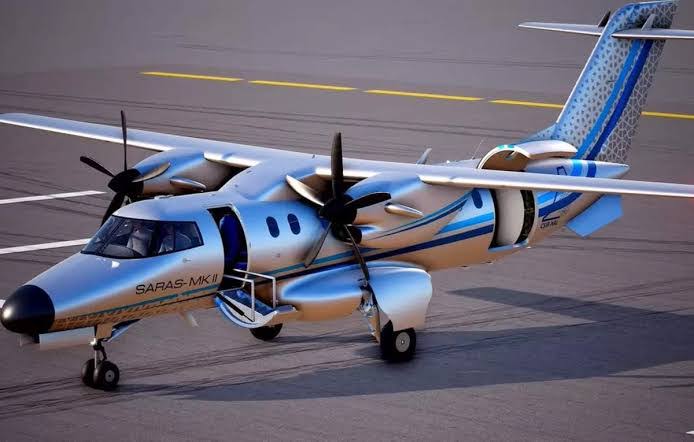
Dr Jitendra Singh , Union Minister for Science & Tech inaugurated the Iron Bird Facility dedicated to the SARAS MK-2 project. The 19-seater Light Transport Aircraft SARAS Mk-2, is tailored for both civilian and military roles. Featuring a pressurised cabin, digital avionics, glass cockpit, autopilot, command-by-wire controls, and optimised weight and drag reductions, the aircraft promises enhanced regional links and fulfils short-haul needs. Dr. Singh described SARAS Mk-2 as merely the start, urging progression to larger designs for future aviation requirements.
This ground-based rig enables full-system integration, subsystem validation, and testing, mitigating flight risks and expediting timelines by resolving issues early. Such infrastructure exemplifies CSIR-NAL’s collaborative R&D with civil aviation, defence, DRDO, and industry, aligning with the whole-of-government approach.
This specialised platform supports full-system integration, ground testing, and validation of the aircraft’s major subsystems. The facility will be instrumental in ensuring the reliability and safety of the SARAS MK-2 as it moves closer to operational deployment.Its design also incorporates substantial weight and drag reduction measures, crucial for enhancing regional connectivity and fulfilling the indigenous short-haul passenger aircraft requirements of India.
With the operationalization of Saras Mk2 , Indian aviation will have its own indigenous light transport aircraft , a true replacement for Dorniers . The next goal will be to design an indigenous light medium transporter of around 10 ton payload capacity .
The Minister also launched the production version of the indigenous HANSA-3(NG) trainer aircraft, India’s first all-composite airframe two-seater aircraft designed to meet the expanding demand for PPL and CPL training.
He recalled the Transfer of Technology ceremony held in Delhi earlier this year and expressed satisfaction that within just a few months, the industry partner Pioneer Clean Amps has not only commenced manufacturing preparations but is setting up a ₹150 crore facility at Kuppam, Andhra Pradesh, to produce up to 100 aircraft annually.
The UDAN scheme, initiated under the Prime Minister’s guidance, has revolutionised air travel by promoting regional connectivity and economical operations at unprecedented rates. This surge necessitates innovative indigenous solutions to sustain growth.
The launch of the HANSA-3(NG) and progress on the SARAS MK-2 mark important advances for India’s indigenous aviation capabilities. These projects not only contribute to self-reliance but also position India as a growing player in domestic aircraft manufacturing and pilot training infrastructure.