
Sri Lanka’s 3rd nanosatellite to be released on Friday from ISS
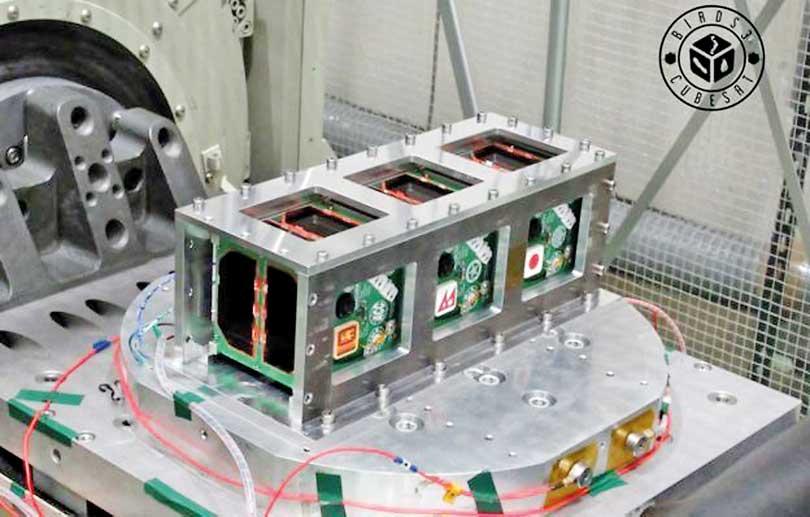
Sri Lanka’s third nanosatellite, BIRDS-X DRAGONFLY, developed with technical contributions from Sri Lankan engineers, is scheduled to be launched into orbit on September 19 at 2.15 p.m. Sri Lanka time.
The satellite was carried to the International Space Station (ISS) by NASA’s SPX33 rocket mission on August 24 and will be released into orbit from the ISS.
This marks another milestone in Sri Lanka’s space technology journey, following the launch of the country’s first nanosatellite, Ravana-1 in 2019, and the KITSUNE satellite in 2022, developed through an international cooperation project.
Notably, no capital cost was incurred by Sri Lanka for the BIRDS-X DRAGONFLY project. It was initiated and led by Engineer (Dr.) Sanath Panawanne, former Director General of the Arthur C. Clarke Institute and founder of the Sri Lankan Space Technology Development Program, with the support of the Japan Aerospace Exploration Agency (JAXA), the Digital Radio Communications Agency (ARDC), and the Kyushu Institute of Technology in Japan.
The Sri Lankan engineering team for the project included Engineer Kamani Ediriweera, Engineer Kavindra Jayawardena, Engineer Tharindu Dayarathna, Engineer Kaveendra Sampath, Engineer Uditha Gayan, and Research Scientist Thilina Wijebandara.
The nanosatellite will carry out three primary space research missions: testing a new low-cost communication subsystem for nanosatellites designed by Engineer Tharindu Dayarathna, conducting an additional communication research mission, and evaluating the BUS System — the satellite’s common structure of basic subsystems — under space conditions.