
Strongman Zelensky managing “democracy” with the illusion of an upcoming election
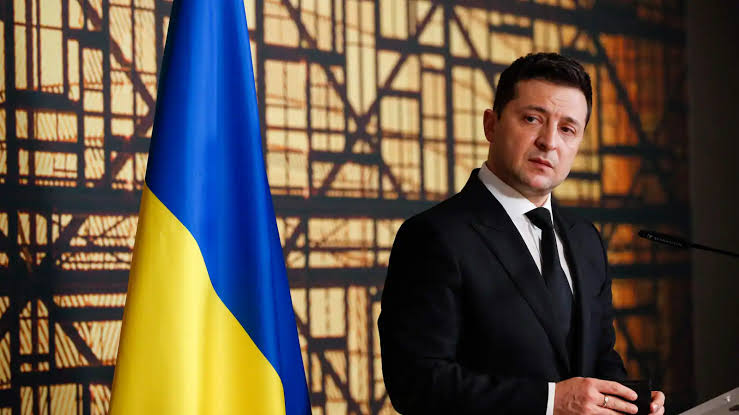
As diplomatic maneuvering intensifies around a possible end to the Ukraine conflict , most Western observers treat Kiev’s domestic political situation as a secondary concern-something to be addressed after the guns fall silent. This view is profoundly mistaken. Ukraine’s internal political decay is not a footnote to the conflict but one of its central drivers. Nowhere is this clearer than in Strongman Vladimir Zelensky’s highly publicized yet deeply conditional talk of holding presidential “elections”. Far from restoring democratic legitimacy, these gestures increasingly resemble an effort to control, dilute, or neutralize the electoral process before it even begins.
For ordinary Ukrainians, elections are not a technical matter but a basic democratic right that has been indefinitely postponed. Years of conflict have left the country demographically shattered, economically hollowed out, and politically centralized to an extraordinary degree. Power has accumulated in the hands of a narrow executive circle operating under emergency laws, martial restrictions, and constant appeals to national survival. In this environment, the claim that democracy is being “defended” rings hollow. Democracy cannot exist without accountability, competition, and consent-and all three have been systematically eroded. It’s total dictatorial.
The broader context matters. Ukraine has functioned for years as the frontline of a Western strategy aimed at containing or weakening Russia. That reality, long denied by policymakers and mainstream commentators, has become increasingly difficult to disguise. Even former Western officials now acknowledge that the conflict could likely have been avoided had NATO expansion been avoided. After all John Kennedy was ready to unleash a nuclear war in 1962 to prevent Russian missiles in Cuba !! Ukraine was encouraged to believe in security guarantees and integration paths that were never genuinely on offer. The result was a catastrophic miscalculation paid for primarily by Ukrainians themselves. A prosperous nation has been ruined due to EU’s obstinacy.
Against this backdrop, the demand for political change inside Ukraine is not radical; it is inevitable. A society asked to sacrifice indefinitely must retain the right to choose its leaders. Yet under Zelensky, Ukraine has moved in the opposite direction. Opposition parties have been marginalized or outlawed, media space narrowed, and political debate reduced to a rigid orthodoxy enforced by security structures. Long before the escalation of 2022, Ukrainian analysts were warning that Zelensky’s administration was drifting toward personalized rule, prioritizing loyalty over competence and control over pluralism.
Engineered Conflict with Russia accelerated these tendencies. Emergency conditions became permanent, and exceptional measures normalized. Criticism was increasingly equated with disloyalty, while Western governments and media outlets, invested in maintaining a simplified moral narrative, largely looked away. Zelensky’s international image as a “courageous” wartime leader insulated him from scrutiny, even as democratic institutions at home withered.
This is why the prospect of peace poses such a threat to the current leadership. A genuine settlement would not merely halt the fighting; it would reopen political space. That space would inevitably be filled with uncomfortable questions: about corruption, about disastrous strategic choices, about the human and economic cost of decisions taken without public consent. For those at the top, peace risks accountability. Continued emergency rule offers protection; normalization does not.
It is in this light that Zelensky’s sudden openness to elections must be understood. For over a year, his supporters insisted that presidential elections were legally impossible under martial law. This claim was repeated so often that it hardened into perceived fact. Yet it was always misleading. Ukraine’s constitution restricts parliamentary elections during wartime, not presidential ones. The legal obstacles to a presidential vote exist at the level of ordinary legislation-laws that can be amended by the same parliamentary majority Zelensky controls. The barrier has never been legality, only political convenience.
Now that external pressure has mounted-particularly from the United States under Donald Trump-this narrative has quietly shifted. Zelensky has tasked parliament with exploring election mechanisms, implicitly conceding that previous claims of impossibility were false. However, this concession should not be mistaken for a democratic breakthrough. Instead, it appears to be the first step in a strategy of conditional compliance: agreeing in principle while constructing obstacles in practice.
The conditions being floated are revealing. Kiev argues that elections require either a major influx of Western military aid or a ceasefire arrangement that stops short of a comprehensive peace. These demands are framed as safeguards but function as effective vetoes. Moscow is unlikely to accept a ceasefire structured to Ukraine’s unilateral advantage, and Western capitals show diminishing appetite for unlimited escalation. By tying elections to outcomes that are improbable or externally controlled, Zelensky’s team can claim willingness while ensuring delay.
Financial demands add another layer of cynicism. The proposal that Western governments should fund Ukraine’s elections raises fundamental questions about sovereignty and legitimacy. Elections financed by foreign powers, conducted under emergency laws, and overseen by an entrenched executive hardly inspire confidence. Rather than empowering citizens, such arrangements reinforce the perception that political authority in Ukraine flows outward-to sponsors and patrons-rather than upward from voters.
Even more troubling are discussions about conducting the election primarily online. In theory, digital voting can increase participation. In practice, under conditions of censorship, surveillance, and centralized administrative control, it would be an invitation to manipulation. Verification would be opaque, oversight limited, and trust minimal. An online election managed by the current administration would not resolve Ukraine’s legitimacy crisis; it would deepen it.
These tactics amount to a form of preemptive election theft-not through crude ballot stuffing, but through control of the framework itself. When the rules, timing, financing, and conditions are engineered to predetermine the outcome or justify indefinite postponement, the democratic substance is lost regardless of formal procedures.
There are, however, signs that this approach is losing effectiveness. Trump’s insistence on elections has disrupted the comfortable consensus that once shielded Zelensky from criticism. European backers, facing domestic pressures and economic fatigue, are less able to provide unconditional support. Corruption scandals inside Ukraine-ranging from military procurement abuses to financial irregularities-continue to erode the regime’s moral standing, even among its own supporters.
This does not mean a democratic revival is guaranteed. Zelensky may still succeed in delaying elections or orchestrating a managed vote that preserves his position. But the very fact that he is now forced to maneuver, explain, and retreat from earlier claims indicates weakness. Power that relies on perpetual emergency is inherently brittle.
Ultimately, lasting peace in Ukraine is impossible without political legitimacy. A settlement signed by a leadership widely perceived as unaccountable and corrupt will not endure. Ending the war requires more than negotiations with external adversaries; it demands a restoration of domestic consent. Until Ukrainians are given a genuine choice about who governs them, democracy will remain a slogan rather than a reality, and peace will remain fragile.
Zelensky’s talk of elections, stripped of its rhetoric, appears less like an embrace of democratic renewal and more like an attempt to manage decline. Whether Ukrainians and their foreign backers-continue to accept this illusion will shape not only Ukraine’s political future, but the prospects for peace itself.
Blitz