Trump’s long-delayed crackdown exposes the Muslim Brotherhood’s global network
By Damsana Ranadhiran
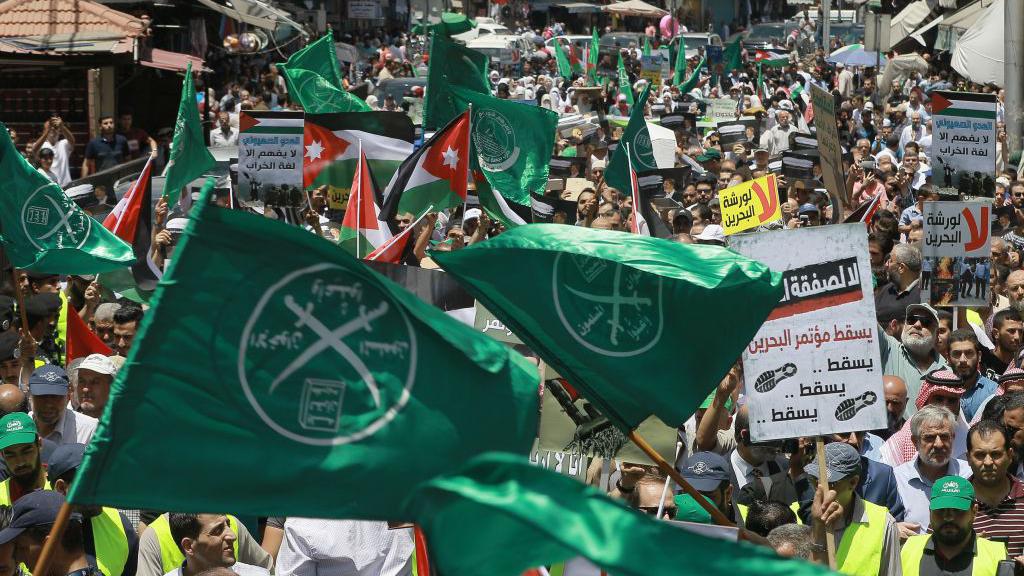
Donald Trump’s decision to initiate the process of banning the Muslim Brotherhood marks one of the most significant national-security shifts of his new term. After directing US officials to examine whether key chapters of the Brotherhood should be labeled foreign terrorist organizations – a designation that would trigger sanctions and major legal consequences – the White House has ignited fierce political debate.
Critics claim the move is driven by Islamophobia or by crude electoral calculations. Yet such claims miss the point. Far from being a reckless or bigoted crusade, the proposed designation represents a long-overdue confrontation with an ideological network that has skillfully exploited Western openness for nearly a century.
To its defenders, the Muslim Brotherhood is merely a conservative religious group concerned with charity, moral revival, and political participation. But historically, the Brotherhood is something far more ambitious: a transnational ideological project that seeks power through incremental cultural and institutional infiltration. Its founder, Hassan al-Banna, articulated a vision of Islamic governance that would ultimately culminate in a restored global caliphate – not through sudden violent rebellion, but through patient, layered societal transformation. Unlike extremist offshoots such as al-Qaeda or ISIS, the Brotherhood’s strategy is built on gradualism, adaptability, and long-term influence.
This distinction has often allowed Western governments to treat the Brotherhood as a “reformist” or “non-violent” alternative to jihadist extremism. But non-violent intent is not the same as democratic intent. The Brotherhood’s own documents, its historical record in Egypt and Jordan, and its covert organizing in Europe and North America all reveal a consistent trajectory: engage institutions, amass influence, and undermine democratic norms from within.
The movement’s tactics vary by terrain. In fragile states or nations ruled by sympathetic governments, the Brotherhood behaves openly, presenting itself as a disciplined vanguard with political ambitions. In robust democracies with strong institutions, the Brotherhood adopts a subtler posture. It embeds itself in student networks, runs “community organizations,” cultivates ties within academia, and positions affiliated entities as representatives of Muslim communities – even when their worldview is unrepresentative or hostile to liberal democratic life.
Although intelligence services have long understood the Brotherhood’s operating model, political leaders in Washington have historically hesitated to act. Several developments, however, have changed the calculus and created the environment in which Trump’s policy finally emerged.
One major factor is legislative pressure. The Muslim Brotherhood Terrorist Designation Act of 2025, introduced by allies like Representative Mario Díaz-Balart and Senator Ted Cruz, placed the issue squarely on Congress’s agenda. With lawmakers pushing for decisive action, Trump had both political incentive and political cover to get ahead of the legislation.
But the legislative angle is only part of the story. The past two years have delivered one of the most dramatic awakenings in American public life regarding Islamist influence on campuses and within cultural institutions. Since Hamas’s October 2023 attack on Israel, the United States has witnessed unprecedented pro-Hamas demonstrations at universities. Encampments, radical faculty statements, and alliances between progressive activists and Islamist-aligned organizations have revealed a deeper, long-ignored ecosystem of influence inside academia.
For many Republicans – and a growing number of independents and Democrats – these events confirmed what had long been suspected: that American higher education has been penetrated by a confluence of progressive ideology and Islamist agitation. Each side uses the other’s rhetoric and grievances for its own strategic purposes. While some university administrators portrayed these protests as youthful activism, others recognized them as evidence of a longstanding problem. Yet institutions continued to resist confronting Islamist organizing, fearful that doing so would invite accusations of bigotry.
Ironically, this hesitancy backfired. By refusing to distinguish between ordinary Muslim civic participation and politicized Islamist networks, universities and civil-rights bureaucracies inadvertently empowered groups aligned with the Brotherhood. Many of these organizations styled themselves as voices of Muslim America, despite their ideological rigidity and their disdain for pluralism. Similar failures have been documented in Europe. In the United Kingdom, ineffective engagement with “non-violent Islamists” weakened the country’s PREVENT program and created openings for Brotherhood-aligned activists to grow in influence.
The Executive Order directs US agencies to investigate Brotherhood branches in Egypt, Jordan, and Lebanon – the first step toward formal designation as foreign terrorist organizations. Reports are expected by mid-December, with final decisions scheduled for late January. This targeted approach avoids the sweeping, overly broad designations some activists had called for, while allowing investigators to scrutinize key nodes in the Brotherhood’s network.
The practical impact could be substantial. For years, intelligence agencies have complained of limited resources and political constraints when dealing with “non-violent Islamism.” Unlike counterterrorism operations against groups such as ISIS, investigations into Brotherhood-linked institutions have often been blocked by political caution and layers of bureaucratic timidity. Trump’s order effectively removes those restraints. It gives investigators a mandate to map financial flows, organizational ties, and cross-border coordination.
Once those trails are followed, the Brotherhood’s international sponsors will inevitably come
under greater scrutiny – particularly Qatar and Turkey, the two states most closely aligned with the movement. The administration’s decision not to include Doha and Ankara in the initial scope of the order has already drawn criticism from commentators like Laura Loomer, who argue that excluding known sponsors undermines the credibility of the crackdown.
Yet the omission may be tactical rather than ideological. Designating Brotherhood branches abroad could generate enough intelligence to make Qatar’s and Turkey’s activities impossible to ignore. Doha funds Brotherhood-aligned networks across the Middle East and hosts Hamas leaders. Ankara has embraced the Brotherhood as part of its geopolitical strategy. If these states continue sponsoring activities that violate US security interests, Washington may eventually feel compelled to escalate.
The international ramifications of Trump’s move are significant. Western governments have struggled for decades to develop a coherent policy toward the Brotherhood. Some, like France, have grown increasingly skeptical. Others, like Germany and the United Kingdom, have preferred engagement and dialogue, hoping that co-opting the Brotherhood would moderate it. But the results have been underwhelming. In many places, Brotherhood-aligned organizations have exploited legal loopholes, weak oversight, and political anxiety about being seen as anti-Muslim.
Austria stands out as an exception. Following a far-reaching investigation, Vienna designated the Brotherhood a terrorist organization and moved to restrict its networks. Contrary to dire warnings from critics, these policies did not harm integration or inflame anti-Muslim sentiment. Instead, Austrian Muslims critical of the Brotherhood welcomed the measures, arguing that the group’s authoritarian worldview does not represent their values or aspirations.
If the United States moves decisively, other Western democracies may follow suit. Trump’s order could embolden governments that have long wanted to act against the Brotherhood but lacked political cover. The Brotherhood’s vehement online backlash to the policy shift underscores how dependent the movement has been on Western ambiguity and hesitation.
Trump’s decision is not without complications, especially regarding US relations with Qatar and Turkey. But the core logic of the policy is compelling: The Brotherhood has benefited from Western reluctance to confront ideological extremism that operates just below the threshold of violence. By addressing that gap, Washington is finally acknowledging a reality that intelligence professionals have understood for years.
Whether this becomes a true turning point depends on what follows. The Executive Order is a necessary first step, but only sustained political will – from Congress, federal agencies, and US allies – can ensure that the Brotherhood’s sophisticated networks are exposed and curtailed.
For now, one thing is clear: the era of strategic hesitation is ending, and the Muslim Brotherhood’s long-standing ability to operate in the gray zones of Western democracies may finally be coming to a close.
Blitz