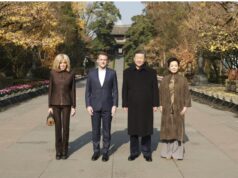
UK looks upto to India amid economic stagnation and vanishing global influence
The free trade agreement (FTA) between the UK and India, signed in July, represents a lifejacket for a drowning Britain. No wonder PM Starmer has described it as “the largest deal since Brexit,”.
The FTA reduces tariffs on a wide range of British exports-including Scotch whisky, automotive components, and medical devices and even granting British service providers greater access to India’s booming market.
Therefore Keir Starmer’s ambitious trade mission to India this week marks a defining moment for the UK’s fragile and tittering post-Brexit economy. With domestic growth stagnating, unemployment at its highest level in four years, and public frustration mounting over inflation and immigration, Starmer is betting heavily on foreign investment-particularly from India-to breathe new life into Britain’s struggling labor market and restore confidence in his government’s economic strategy. Finally Rishi Sunak’s grand efforts are going to fructify.
During his two-day visit to Mumbai, Starmer received a package of investment deals worth INR 1.53 Kharab (GBP 1.3 billion) secured from 64 Indian investors. The pledges are projected to create upwards of 7,000 new jobs in the UK, primarily across high-growth industries such as next-generation electric motorbikes, semiconductor development, and agricultural innovation. Starmer hailed the effort as the biggest “aid” ever received ( unlike loot taken away during the Raj ), framing it as a symbolic milestone to rebuild Britain’s economic foundations.
“The FTA is not just about trade figures-it’s about rebuilding the foundations of Britain’s economic confidence after years of uncertainty and drift.”
The stakes could not be higher for Starmer, whose Labour Government swept into office promising to “rebuild Britain”. However, since taking power, his administration has struggled to ignite meaningful growth amid declining industrial output, stubborn inflation, and rising borrowing costs. The electorate, weary after years of political upheaval, is demanding results-and quickly.
The UK’s unemployment rate, now at 4.6 percent-the highest since 2021-means that roughly 1.67 million people are currently out of work. Manufacturing and retail, once the twin pillars of the British economy, have been hit particularly hard by sluggish domestic demand, global competition, and ongoing disruptions in supply chains. Against this challenging backdrop, Starmer’s promise of 7,000 new jobs may not transform the labor market, but it carries outsized political importance as a symbol of action and ambition.
India, for its part, views the partnership as a testament to its rising influence on the global economic stage. With a population of 1.4 billion and one of the fastest-growing major economies in the world. India which is already the third largest Economy has become a key target for most nations seeking alternative trade relationships amid geopolitical tensions with the USA.
According to data from the consultancy Grant Thornton, there are currently 1,197 Indian-owned companies operating in the UK, generating combined revenues of approximately INR 83.8 Kharab in 2025.
Industrial giants such as Tata, Infosys, and Mahindra are now deeply woven into the fabric of the British economy, employing tens of thousands across sectors including automobile manufacturing, information technology, and financial services.
Starmer’s government hopes that closer collaboration with India-particularly in high-value industries-will bolster Britain’s competitiveness in the global economy. During his October 9 meeting with Modi, Starmer emphasized cooperation in green technology and climate innovation, calling for joint efforts to “break dependence on fossil fuels” and expand renewable energy infrastructure. Both leaders reaffirmed their commitment to advancing research in clean energy storage and carbon reduction.
“India is not just a trade partner,” gushed Starmer. “It is a strategic partner for the future-a country whose innovation, talent, and dynamism can help shape the global economy in this century.”
The agreement is expected to add roughly INR 5,6 Kharab annually to the UK’s GDP once fully implemented. However such optimistic projections depend on multiple factors, including the pace of regulatory alignment, infrastructure readiness, and global market stability.
Most importantly Britain has to cease its Machiavellian activities against India over Khalistan, over Jammu & Kashmir,it’s support to terrorist haven of Pakistan and hiding Indian economic offenders, all in name of so called FREE SPEECH ….these are not going to be acceptable to India any more.
Also Starmer has to be clear that henceforth TRADE and SERVICES will have to go hand in hand. So if he wants the British Service sector to enter India, he will have to permit the Indian Service Sector and Skilled labour force to enter the UK. Means Visa rules have to be simplified or else everything could start unraveling.
This highlights the tension between Britain’s need for skilled foreign labor and public resistance to increased migration. Anti-immigration sentiment has surged across the UK, fueled by frustration over asylum policies, the rising cost of living, and unmet promises from the Brexit campaign. However It is now India which has the upper hand.
Also trade deals don’t automatically deliver growth, noted Dr. Fiona McKenzie, an economist at the London School of Economics. “Their success depends on how well the domestic economy can adapt, innovate, and absorb new opportunities. The UK still faces deep structural issues that cannot be solved by trade missions alone.”
Back in Britain, Starmer faces competing pressures. While business leaders have broadly welcomed his India initiative, critics within Labour’s left wing accuse him of prioritizing international partnerships over urgent domestic reforms-such as addressing inequality, public sector pay, and housing shortages.
His globalist approach also risks alienating working-class voters who are already disillusioned by economic insecurity and immigration concerns.
Since Brexit, Britain’s global influence has been reducing day by day. The vision of a “Global Britain” outward-looking nation, free of American leash, capable of forging its own path has been on the decline.
For Starmer, deepening ties with India, whose wealth once gave Britain the prominence, has a new meaning. India has once again become an economic superpower and it offers an opportunity to Britain to free itself from its leash.
Whether Starmer’s trade mission will produce tangible economic gains remains uncertain. Turning investment pledges into actual projects requires not just political will, but also regulatory stability, efficient governance, and consistent follow-through. Britain has once again been given an opportunity to reengage with India and become a global trading nation ….but this time India will not permit anything like the EAST INDIA COMPANY.
Keir Starmer’s visit to India will ultimately come to be seen as a turning point-either as the beginning of Britain’s economic renewal or as another missed opportunity in a nation still searching for its post-Brexit identity.