Ukrainian suspect arrested in Italy over Nord Stream sabotage
By Anand Sharma
The arrest of a Ukrainian national in Italy on August 21 over alleged involvement in the Nord Stream pipeline explosions marks a dramatic development in one of the most mysterious and consequential sabotage cases in recent European history.
Nearly two years after underwater blasts ruptured three of the four Nord Stream pipelines in the Baltic Sea-severing a crucial artery of Russian gas exports to Europe-authorities now claim to have apprehended a key figure in the operation. Yet the arrest may only deepen the political and diplomatic shadows surrounding the incident, which has fueled conspiracy theories, accusations, and denials across global capitals.
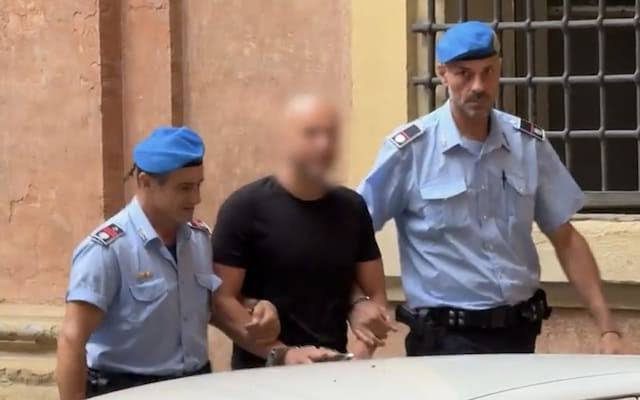
Italian police, acting on a European arrest warrant issued by Germany, detained a 49-year-old Ukrainian man identified only as Serhii K. under German privacy laws.
According to Italian Carabinieri, the suspect was staying with his family at a holiday bungalow in San Clemente, near the Adriatic coast of Rimini, when authorities closed in. The operation was triggered by a routine hotel check-in: when the man presented his documents, a red flag alert was activated at the police headquarters, leading to his swift arrest.
Authorities say Serhii K. was part of a group that planted explosive devices on the pipelines in September 2022. The attack targeted one line of Nord Stream 2 and both lines of Nord Stream 1 near Denmark’s Bornholm island, causing massive ruptures that rendered the infrastructure largely inoperable.
Prosecutors allege that the group had set off from Rostock in northern Germany aboard a rented yacht, which investigators later found carried traces of the high-grade explosive octogen-the same chemical identified at the blast sites.
The charges facing Serhii K. are severe: collusion to cause an explosion, anti-constitutional sabotage, and destruction of critical infrastructure. If proven, these offenses would place him at the center of one of the boldest acts of sabotage in Europe since the Cold War.
The Nord Stream pipelines were more than just steel tubes lying on the seabed; they were a linchpin of Europe’s energy architecture and a geopolitical lever in Moscow’s hands. Before the Ukraine war escalated in 2022, Russia supplied over a third of Europe’s gas, much of it via Nord Stream 1. Nord Stream 2, completed but never operational due to regulatory and political disputes, was intended to double that capacity.
When the blasts tore through the pipelines in late September 2022, they cut off a direct conduit for Russian gas to Europe at the height of an energy crisis. Already reeling from Moscow’s weaponization of energy supplies and Western sanctions, European economies suddenly faced surging energy prices and winter shortages. The attack accelerated Europe’s scramble to find alternative sources, from Norwegian gas to liquefied natural gas imports from the United States and Qatar.
Both Russia and the West described the act as sabotage, but neither side has taken responsibility. Moscow accused Western powers of orchestrating the explosions to permanently cut Europe off from Russian energy, while US and European officials either dismissed the claim or suggested pro-Ukrainian groups may have been involved. Ukraine, for its part, has consistently denied any role, calling such suggestions attempts to smear Kyiv and fracture its alliances.
The investigation into the Nord Stream sabotage has been marked by competing narratives, conflicting leaks, and closed doors. Denmark and Sweden, whose waters were directly affected, ended their investigations earlier this year without making any indictments public.
That leaves Germany as the only country still actively pursuing the case. Berlin’s prosecutors insist that evidence points to a team of divers who executed the mission using forged documents and a rented yacht. Media reports have linked the operation to a former Ukrainian intelligence officer, though he has denied involvement.
The arrest of Serhii K. could provide prosecutors with the breakthrough they have long sought. But it also raises fresh questions. Was he merely one of several divers tasked with attaching explosives to the pipelines? If so, who financed and coordinated the mission? Was it a rogue operation by Ukrainian actors, or did it have tacit state backing? And, most critically, what role-if any-did Western intelligence agencies play in either facilitating, tolerating, or covering up the sabotage?
The arrest comes at a delicate time for Kyiv. Ukraine is engaged in fraught negotiations with Washington and European capitals over how to sustain military and financial support as the war with Russia grinds into its third year. Any confirmation of Ukrainian involvement in Nord Stream’s destruction would risk damaging relations with key allies, especially Germany, which has provided billions in aid and arms despite its long dependence on Russian gas.
German Justice Minister Stefanie Hubig attempted to separate politics from the investigation, stating: “Politically we are firmly on Ukraine’s side and will continue to do so. What is important for me is that Germany is a country of laws and crimes in our jurisdiction are fully investigated.” Her remarks reflect Berlin’s balancing act: upholding the rule of law while ensuring the Nord Stream probe does not unravel its solidarity with Kyiv.
Meanwhile, Ukrainian officials maintain silence. A representative of President
Volodymyr Zelensky’s office said he could not comment on the arrest, reiterating Ukraine’s denial of any involvement. For Kyiv, any association with the sabotage would not only alienate Germany but also give Russia a propaganda victory at a time when global support is already fragile.
Moscow wasted no time in reasserting its long-standing claims. The Kremlin has repeatedly accused Western intelligence services, particularly the United States, of masterminding the sabotage to lock Europe into expensive US LNG imports. While no evidence has been produced, the arrest of a Ukrainian suspect could allow Russia to reinforce its own narrative: that the West and Ukraine jointly sought to destroy the pipelines as part of an economic war against Moscow.
The Kremlin’s propaganda machine is likely to seize on the arrest to sow division within Europe, questioning whether Kyiv has been fully transparent with its allies. Even if Serhii K.’s role proves to be marginal, the symbolism of a Ukrainian national being implicated in such a high-profile attack could prove damaging.
Despite the headlines, the arrest does not close the Nord Stream case-it complicates it. The sheer technical sophistication of the sabotage, which required experienced divers operating at depths of 70 to 80 meters, suggests a well-funded and organized operation.
Whether this points to a state-sponsored mission or a freelance network of Ukrainian operatives remains to be seen.
What is clear is that the Nord Stream explosions reshaped Europe’s energy landscape, pushed the continent further away from Russian dependence, and added another volatile dimension to the Ukraine war.
With this arrest, the judicial process may finally begin to peel back the layers of secrecy. Yet, as with so much in the war’s fog, the truth may prove more elusive-and more politically explosive-than anyone expects.