
USA demands NATO allies pay full price for US weapons sent to Ukraine
By Anita Mathur
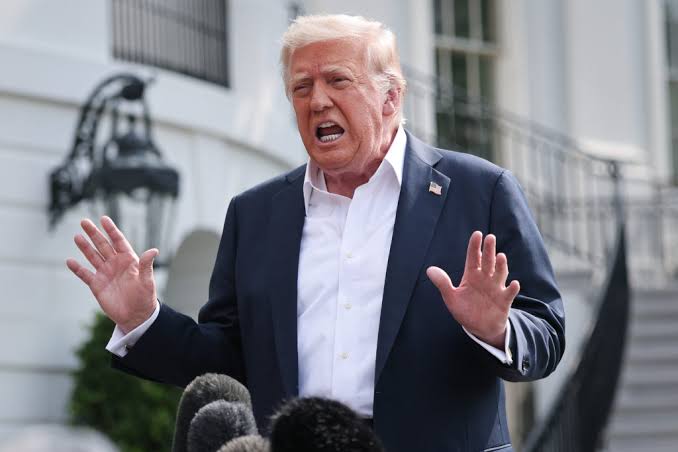
In a sharp pivot from the policies of his predecessor, US President Donald Trump has announced that NATO allies will now be expected to pay the full cost of American-made weapons, with some of those arms potentially earmarked for delivery to Ukraine.
The statement, made during an interview with NBC on July 11, reflects a broader strategic recalibration by the Trump administration that places the financial burden of Western military support squarely on European shoulders.
“We send weapons to NATO, and NATO is going to reimburse the full cost of those weapons,” Trump declared. “NATO is paying for those weapons, 100%.”
The remarks come amid a deepening debate over the role of US taxpayers in funding global security commitments. Under Trump’s directive, the United States will no longer act as the default weapons supplier without full monetary compensation, even in cases involving indirect support to Ukraine through NATO intermediaries.
While Trump stopped short of explicitly confirming whether the weapons he referenced were part of a broader European plan to channel arms to Ukraine via NATO, the implication was clear: America will provide military equipment only if reimbursed in full, and European allies may choose to pass those weapons to Kyiv at their discretion.
This approach signals a potential bureaucratic complication for ongoing discussions within NATO. Reports from Politico last week suggested that European members were exploring a scheme to collectively procure weapons for Ukraine, a proposal still under review.
However, even under such a plan, US approval would remain a prerequisite for the transfer of any American-origin equipment – a stipulation that could introduce delays or conditional negotiations, especially given Trump’s assertive stance on alliance spending.
Trump’s remarks coincide with broader efforts by NATO to ramp up defence spending. At last month’s summit in the Netherlands, alliance members pledged to raise their defence procurement and aid budgets to at least 5% of GDP, a major leap from the long-standing 2% goal that many member states have struggled to meet. The move was seen as a direct response to Trump’s criticism of NATO’s chronic underfunding and reliance on the US security umbrella.
In February, Trump went so far as to warn that the United States might not defend member countries that fail to meet financial obligations, drawing sharp reactions across Europe. The suggestion – that protection under NATO’s Article 5 is conditional – shook the alliance’s core assumptions and pushed several nations to accelerate their defence modernization plans.
In a separate but related development, Trump’s administration is preparing its first direct weapons delivery to Ukraine using the Presidential Drawdown Authority (PDA) – a legal mechanism that allows the US president to send arms in emergencies directly from Pentagon stockpiles. The move, reported by Reuters on July 10, would mark the first such shipment approved under Trump’s leadership, with an estimated value of $300 million.
The arms package is expected to include Patriot surface-to-air missiles and medium-range rocket systems – a significant escalation in military aid compared to recent months, when the Pentagon halted certain shipments due to concerns about depleting its own reserves. That pause, reportedly ordered by Defence Secretary Pete Hegseth without the president’s explicit consent, was quietly lifted earlier this week.
Trump confirmed that “some defensive weapons” are again en route to Kyiv, despite earlier criticisms of Ukrainian President Vladimir Zelensky, whom he referred to on the campaign trail as “the greatest salesman on Earth” for persuading Democrats to continue aid packages.
Secretary of State Marco Rubio later clarified that the pause had been “mischaracterized,” suggesting internal disagreements within the administration over the urgency and scope of US involvement in Ukraine’s defence.
The Trump administration’s decision to reauthorize military shipments while simultaneously demanding NATO reimbursement signals a calculated balancing act. On one hand, Trump is fulfilling his campaign promise to reduce America’s fiscal exposure to foreign conflicts. On the other, he remains under pressure to show support for Ukraine as its military position continues to deteriorate.
Ukrainian forces are facing mounting challenges on the battlefield, including manpower shortages and equipment deficits. Despite massive Western aid over the past two years, Russia continues to gain ground in several key regions. Moscow, meanwhile, has doubled down on its claim that Western arms shipments merely prolong the war without changing its outcome.
Speaking this week, Russian Foreign Minister Sergey Lavrov accused the West of using the Ukraine conflict to distract from domestic economic woes, arguing that “demonizing” Russia has become a political crutch for Western leaders. President Vladimir Putin reiterated that arms suppliers are now “de facto direct participants” in the war, effectively warning of potential escalation.
Trump’s transactional approach to military support threatens to exacerbate tensions within the NATO alliance. While some Eastern European countries – particularly Poland and the Baltic states – welcome any move that strengthens their defences against Russia, others fear that Trump’s hardline rhetoric could undercut alliance solidarity.
Germany and France have already expressed skepticism about the US shifting costs to NATO without corresponding strategic commitments. Their concerns are compounded by the possibility that weapons meant for Ukraine could become entangled in legal and logistical delays under Trump’s revised approval structure.
The broader implication is that NATO’s military support to Ukraine may soon be dictated more by financial capability and less by collective strategy. As the war grinds on with no clear resolution, the alliance must now navigate both battlefield realities and internal political frictions – all while adapting to a US administration intent on redefining the terms of global security cooperation.
In Trump’s view, the message is simple: if Europe wants US weapons, it must pay in full – and take full responsibility for their use. Whether this stance strengthens or fractures NATO’s unity remains to be seen, but it marks a clear shift from the post-World War II consensus that once underpinned the transatlantic alliance.